
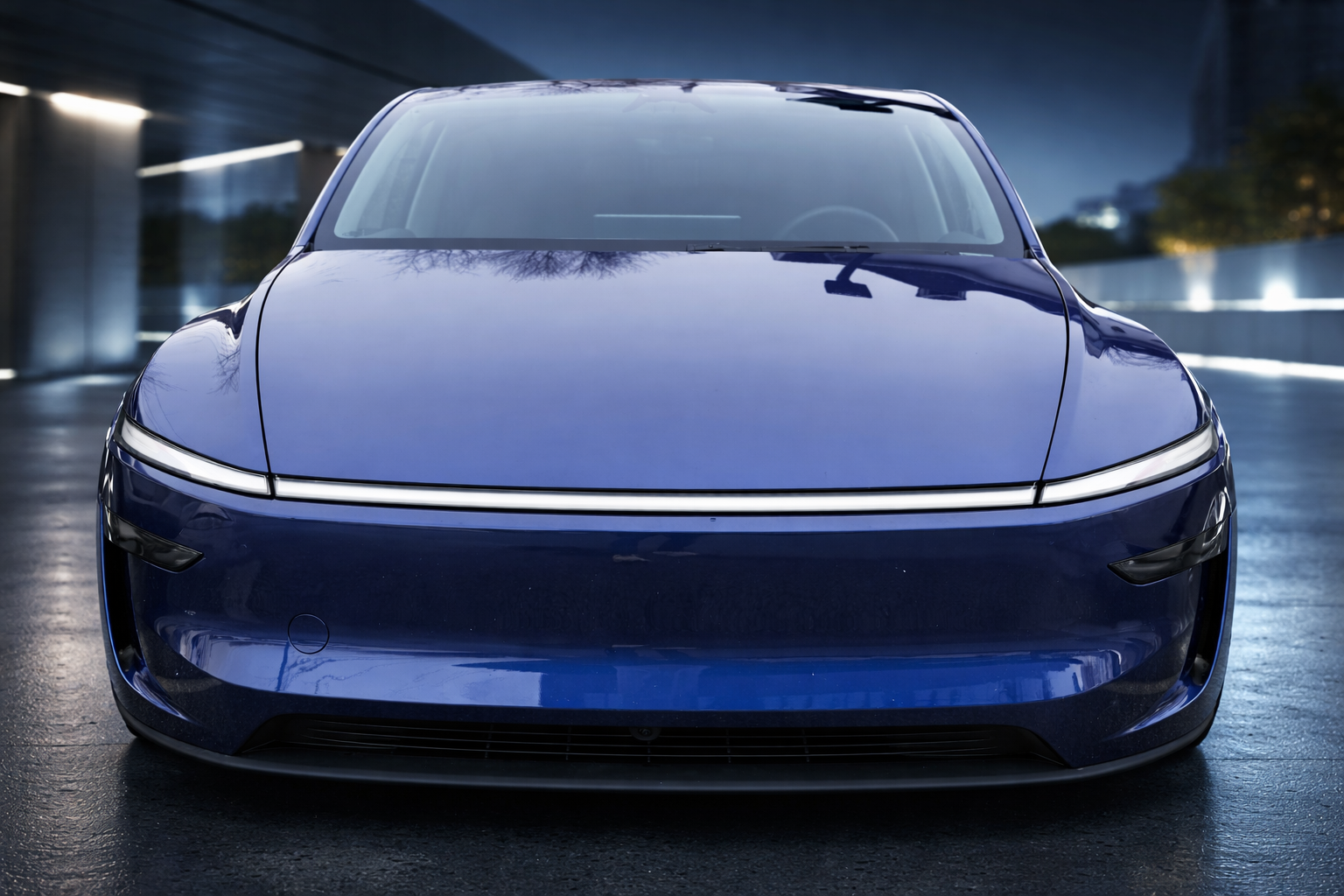
Tesla FSD HW4 Review: Worth It?
Full Self-Driving (Supervised) on HW4 still has a few weak spots, but in the 2026 Model Y Juniper it finally feels useful enough to leave on for most of the drive.
This Tesla FSD HW4 review has a simple answer: yes, we think Full Self-Driving (Supervised) on HW4 is worth it in our 2026 Model Y Juniper. It is still too slow at stop signs, but the overall experience is strong enough that we leave it on for most drives without thinking twice about it.
The biggest surprise is not one flashy trick. It is how normal the system feels once you spend real time with it in our 2026 Model Y Juniper. We have been using FSD for months across highway, suburban roads, and city driving, and we use it about 97% of the time because it removes more fatigue than we expected and does much more of the drive well than older Tesla skepticism would suggest.
That does not mean it is perfect, and it definitely does not mean it should be treated like magic. It still needs supervision, and it still has moments where the software is more cautious than a confident human driver would be. Even so, we think the value equation feels completely different on HW4 in the 2026 Model Y Juniper because the system is finally good often enough to matter every day.
BTI on InstagramNew tech, decoded in plain EnglishFollow @besttechinsight for quick breakdowns of products, chips, robots, EVs, and science. Full reviews and guides stay here on BTI.
Follow @besttechinsightTesla FSD HW4 review: the short version
The easiest way to explain the current state of Tesla Full Self-Driving (Supervised) on HW4 is this: it finally feels like a real feature instead of a permanent demo. It still asks for attention, and it still has edge cases, but the baseline competence is high enough that the software changes how the car gets driven.
That matters because the old conversation around FSD often got stuck in absolutes. Either it was presented as a miracle, or it was dismissed as a gimmick. The reality in the 2026 Model Y Juniper is much more useful than either extreme. The system is not human. It is not ready to be trusted blindly. But it is good enough that taking it away would feel like losing one of the best reasons to own the car.
For drivers who spend a lot of time on the road, that is a big distinction. A feature does not have to be flawless to be valuable. It has to reduce stress, reduce workload, and make the car feel better on real trips. That is exactly what HW4 FSD now does more consistently than older Tesla behavior ever managed.
Why FSD on HW4 feels so strong in the 2026 Model Y Juniper
It removes more fatigue than expected
The biggest win is not novelty. It is energy. On longer drives, the system cuts down the small mental tax that comes from constant lane management, traffic compression, and endless micro-corrections. That is the kind of benefit that sounds small on paper and feels huge in real use.
A lot of car technology is impressive for five minutes and forgettable after a month. This does the opposite. The more miles it covers well, the more obvious it becomes that the best part of the software is how much calmer the drive feels.
Lane changes and traffic flow feel far more natural
One of the easiest places to spot progress is in traffic flow. Lane changes feel more deliberate, less twitchy, and less like the system is constantly second-guessing itself. That does not mean every move is perfect, but the overall behavior feels more confident and less awkward than the older Tesla reputation would suggest.
That confidence matters because poor lane behavior is one of the fastest ways to make driver assistance feel exhausting. In the 2026 Model Y Juniper, HW4 FSD usually feels like it understands the pace of the road well enough to stay useful instead of constantly becoming a new thing to babysit.
It stays on because it is good enough, not because it is a toy
The strongest endorsement is simple: the feature gets left on. That is not because every moment is amazing. It is because the system earns enough trust across highway, suburban, and city routes that it feels easier to keep using than to turn off.
That is a meaningful shift from older driver-assist tech that feels interesting for the first week and then starts getting ignored. When a system is active for roughly 97% of normal mixed driving, it is no longer just a headline feature. It has become part of how the car is actually used.
The HW4 setup makes the whole experience feel more mature
Part of what makes this version land so well is that the overall package feels more settled. The HW4 setup in the 2026 Model Y Juniper does not come across like software trying to prove a point. It feels like software trying to complete the drive cleanly.
That difference is hard to quantify in a single metric, but it shows up in the total experience. The car feels more composed, the handoffs feel less frequent, and the system feels more like a usable driving layer than a constant science experiment.
Where Tesla FSD on HW4 still feels limited
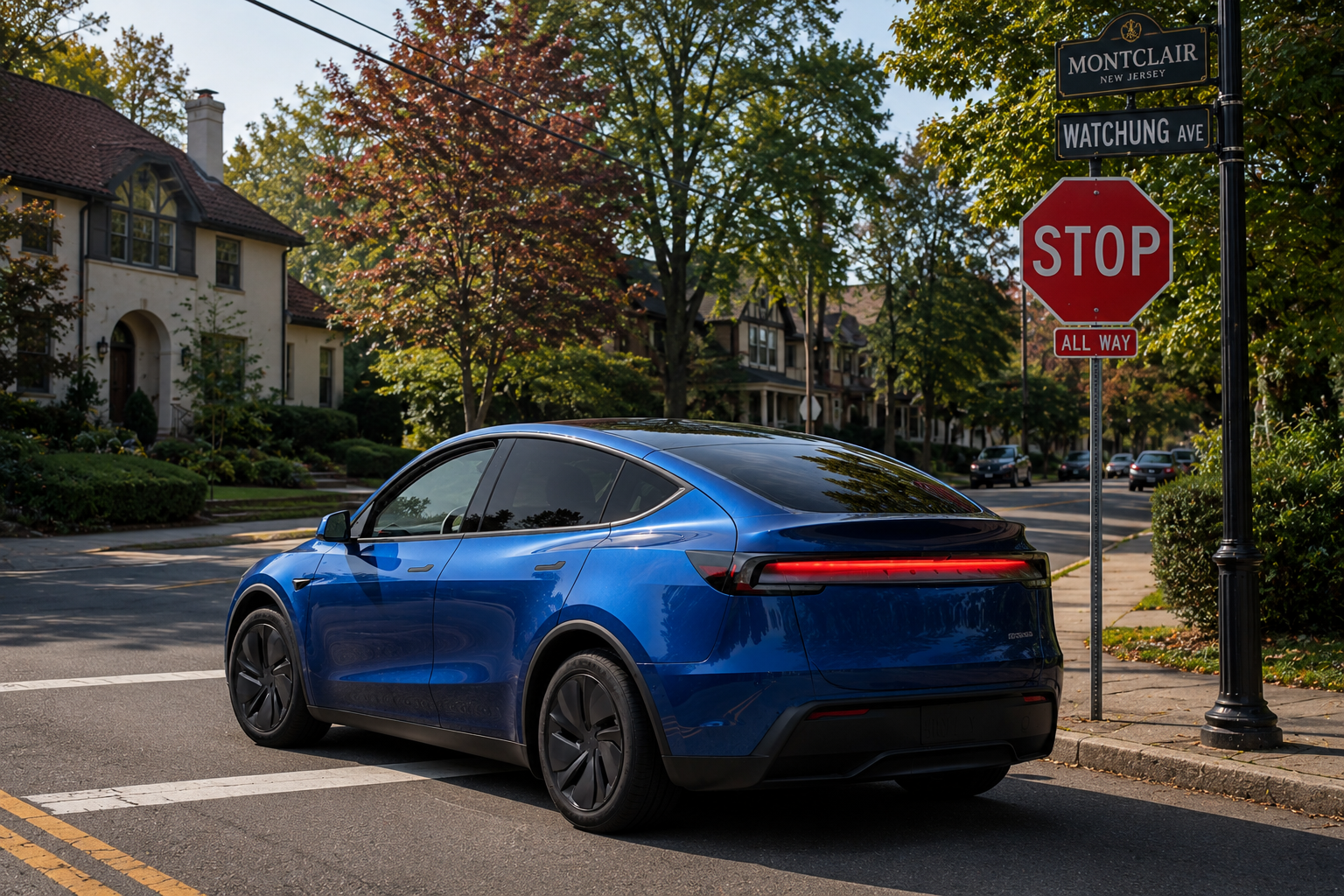
The biggest weakness is stop signs. The system is simply too slow there. It approaches them with more caution than most human drivers would use, and that can make the behavior feel awkward when everything else around it is moving at a more natural pace.
That does not ruin the feature, but it stands out because the rest of the driving experience is strong enough that this weakness becomes easy to notice. The software is often smooth on the highway, solid in flowing traffic, and comfortable enough to leave on for long stretches. Then it reaches a stop sign and reminds you that it is still more conservative than it needs to be.
Another limitation is tight parallel parking. FSD can get into or out of very tight parallel parking spaces, but it is not especially efficient yet. Because the system is being extremely cautious, the maneuver can feel slow and jerky, with too many back-and-forth adjustments compared with how a normal human driver would handle the same tight spot.
It also still needs supervision, and that should not be sugar-coated. This is not a hands-off robot driver. It is advanced driver assistance that has become genuinely useful. Drivers still have to watch the road, stay engaged, and be ready to step in when the system hesitates or makes a choice that does not feel optimal.
That is why expectations matter so much. Someone expecting perfect autonomy will come away disappointed. Someone expecting a very capable supervised system that takes work out of most drives is much more likely to understand why the overall verdict can still be strongly positive.
Why it still feels worth it
Mixed driving is where the system proves itself
Highway performance matters, but it is not enough on its own anymore. The reason the 2026 Model Y Juniper makes such a strong case for FSD is that the system feels useful across a real mix of driving. It handles enough highway, suburban, and city work well enough that the feature keeps earning another chance to stay on.
That is important because a lot of people asking whether FSD is worth it are not shopping for a highway-only trick. They want to know whether the software improves normal ownership. In this car, the answer is yes. The best moments are not isolated demos. They happen in everyday driving.
It compares well to older Tesla expectations
Skeptical readers are often reacting to the older Tesla image of FSD: nervous lane decisions, awkward behavior, or a system that felt more stressful than helpful. That image did not come from nowhere, but it also does not describe the current experience very well.
This version feels more mature. It is calmer, more coherent, and easier to trust for long stretches. That does not mean every critic will suddenly love it. It does mean that anyone judging today’s HW4 setup by years-old assumptions is probably grading the wrong version of the product.
It is still not better than a strong human driver everywhere
A good human driver still handles some moments better, especially around stop signs and certain low-speed judgment calls. That comparison matters, because it keeps the praise grounded. The point is not that FSD has surpassed people in all conditions. The point is that it now delivers enough competent driving across enough situations to provide real value on nearly every outing.
That is also why the system can feel worth it while still being imperfect. The right question is not whether it beats the best possible human at every task. The right question is whether it meaningfully improves the drive often enough to justify itself. For this 2026 Model Y Juniper, it does.
The official framing finally lines up better with the product
Tesla’s current Full Self-Driving (Supervised) naming is more honest than the older perception people still carry around. That phrasing fits the product better because it highlights both sides of the story. The system is advanced, and it also still requires driver attention.
For readers who want the official Tesla position, the best place to start is Tesla’s Autopilot and Full Self-Driving support page. For the ownership side of the conversation, the more interesting question is how it feels after months in the real world. That answer is much better than a lot of non-owners probably expect.
Is Tesla FSD worth it on HW4 in the 2026 Model Y Juniper?
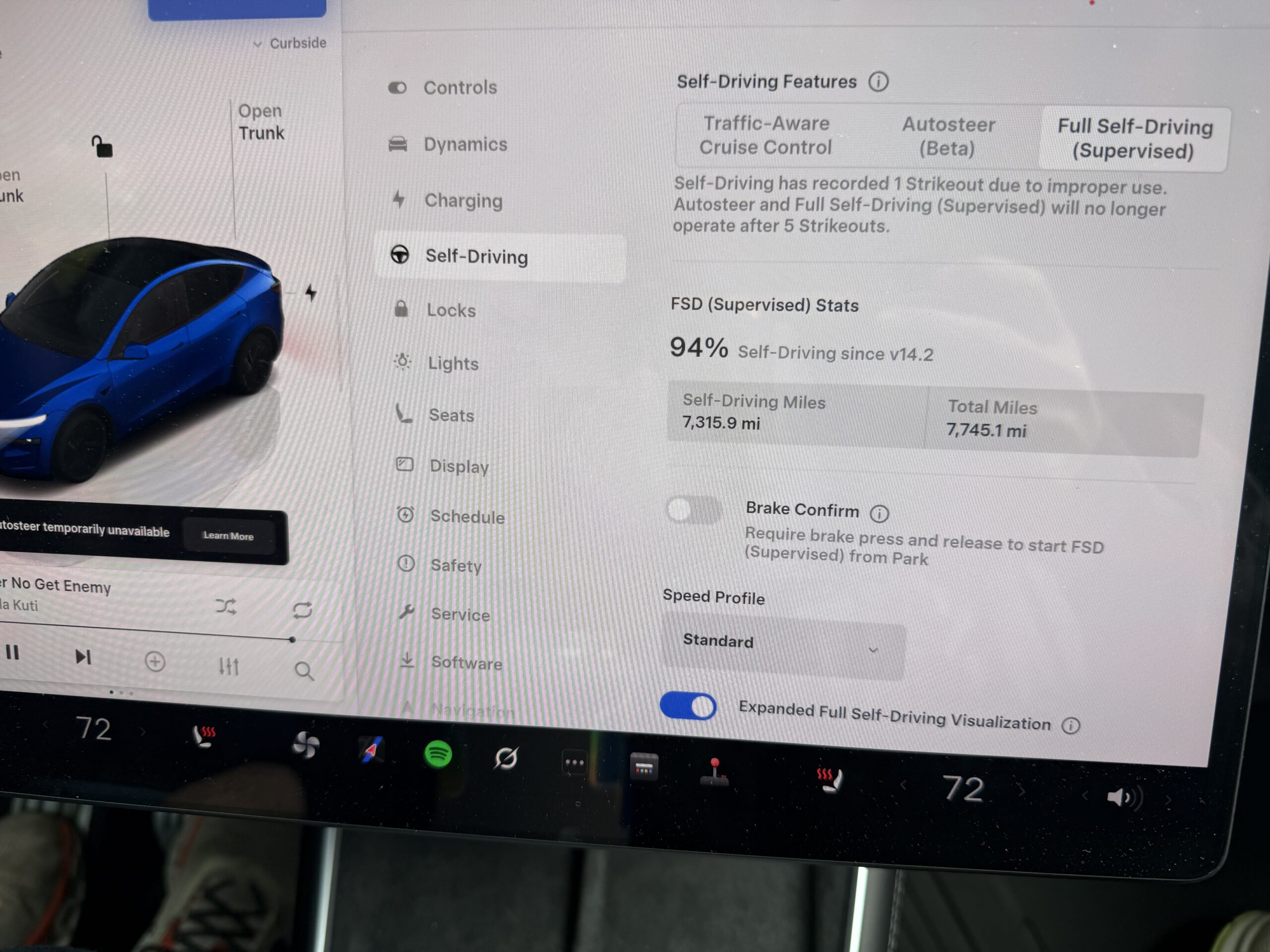
Yes, especially if the goal is to get the best Tesla tech experience the vehicle can offer. This is the first point where Full Self-Driving (Supervised) on HW4 in the 2026 Model Y Juniper feels less like a speculative feature and more like something that genuinely improves daily ownership.
The case for it is not built on perfection. It is built on repetition. When the system is active for roughly 97% of mixed driving, takes real fatigue out of the trip, feels stronger than older Tesla expectations, and still leaves the driver thinking they would choose it again, the value case becomes a lot easier to defend.
The biggest caveat remains stop-sign behavior. It is too slow there, and that should be said clearly. But it is not enough to outweigh how good the rest of the system has become. For drivers who want the most advanced and satisfying version of the Model Y experience, HW4 FSD is worth serious consideration and likely worth buying.
If you are ordering a Tesla and want to support Best Tech Insight, you can use our Tesla referral link. For more Tesla ownership coverage after this Tesla FSD HW4 review, visit our guides hub for the rest of the lineup. The broader takeaway is simple: this is the best Tesla driving-tech package yet, and in the 2026 Model Y Juniper it finally feels that way from behind the wheel.
Leave a Reply