
Robotics explainer
Physical AI Robots Explained: Why AI Is Leaving the Screen
The simple version: physical AI is AI with sensors, motors, and a place in the real world where mistakes have consequences.
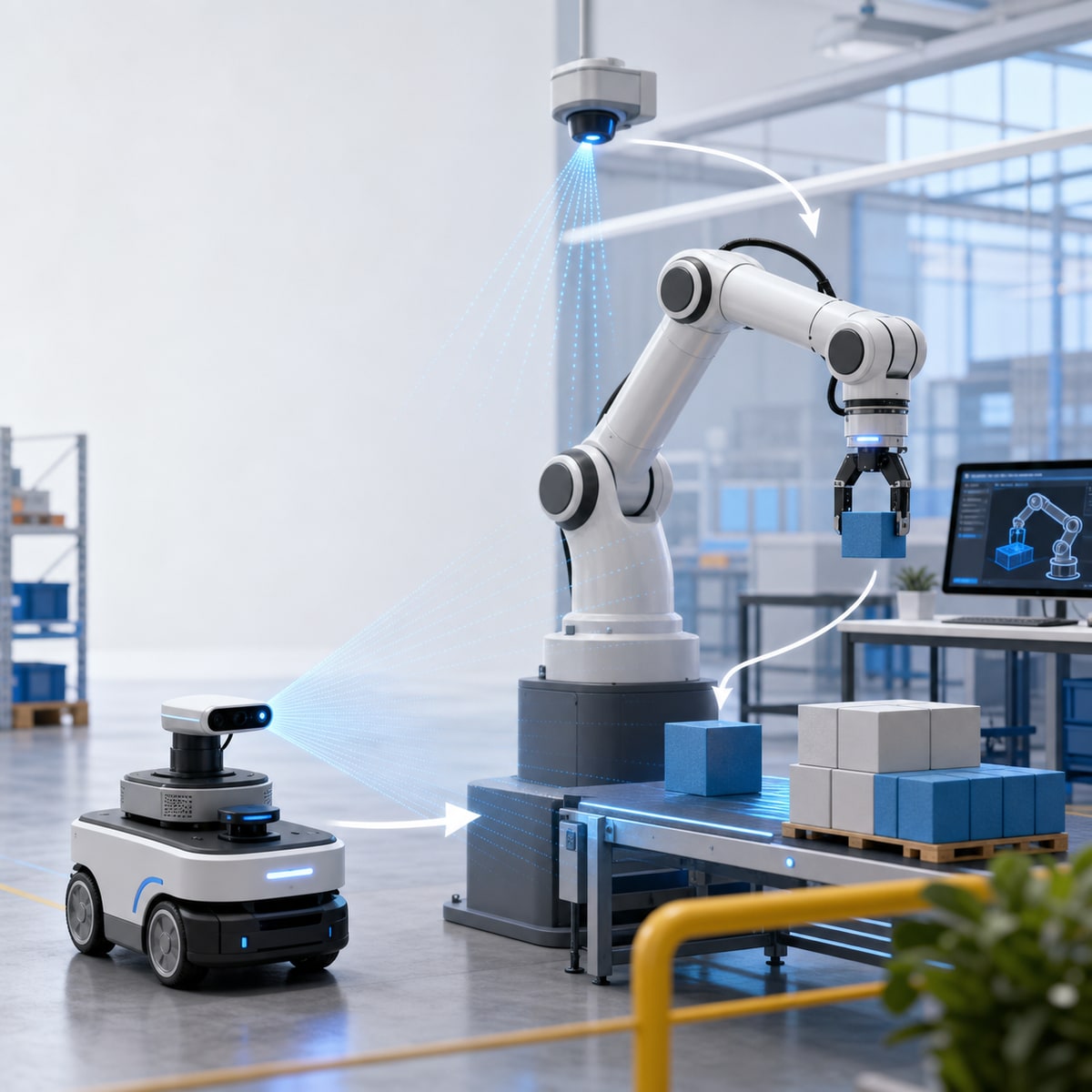
Physical AI robots are AI systems that do more than answer on a screen. They sense the world, choose an action, and move something physical, such as a wheel, robot arm, gripper, tool, or vehicle.
That is why the phrase keeps showing up around robotics, factories, autonomous machines, and science demos. The interesting part is not that a robot looks smart for five seconds. The interesting part is whether it can sense the messy real world, move safely, and recover when the situation changes.
BTI did not test any robot hardware, verify retail products, measure performance, check prices, or confirm availability. This guide uses public CES, NVIDIA GTC, EngineAI, and news-report source pages to explain the concept in plain English for readers who want to understand what the next wave of robotics coverage is really saying.
- Physical AI means the AI has a body: sensors to notice, motors to act, and rules to stay safe.
- The best demo question is simple: where can this work safely after the camera stops recording?
- Factories, roads, labs, and homes are not the same. Each space changes what the robot must prove.
Why the EngineAI filing story matters
In June 2026, Bloomberg reported that Chinese humanoid-robot company EngineAI had filed confidentially for a Hong Kong IPO. That is not a reason for normal readers to treat any robot as a finished home product or an investment recommendation. It is a useful signal that humanoid robots are moving from viral demo clips toward a more serious production, supply-chain, and customer-proof conversation.
The beginner-friendly question is simple: can the demo survive a real workspace? A humanoid robot clip is interesting when it shows walking, balancing, carrying, sorting, or interacting. It becomes more meaningful when the company can explain the exact work setting, safety limits, maintenance plan, and repeatable task.
Physical AI robots quick answer
Physical AI robots matter because they move AI from a chat box into the world. A chatbot can be wrong and annoy you. A robot arm, vehicle, or machine can be wrong and hit, drop, block, spill, or break something. That is why the useful question is not just “how smart is the model?” The useful question is “what can it safely sense and move in this exact environment?”
Use this one-line rule: screen AI answers; physical AI acts. Once AI acts, the environment, sensors, motors, safety rules, and human handoff become part of the product.
| Where it shows up | Plain role | Example | BTI check |
|---|---|---|---|
| Factory robot | AI that handles a repeated physical task in a controlled space. | A robot arm may inspect, sort, pick, place, or move items when the work area is designed around it. | Ask whether the demo shows the real work area, safety limits, error recovery, and uptime. |
| Autonomous vehicle or machine | AI that reads the outside world while steering, braking, or navigating. | Cars, delivery machines, and industrial vehicles all need sensors, maps, compute, and conservative safety rules. | Ask what environment it can handle and what still requires a human operator. |
| Science or lab system | AI that helps researchers test, measure, simulate, or repeat a physical process. | A lab robot can run careful steps while AI helps decide what to test next. | Ask whether the result is a research demo, a production tool, or a future product. |
| Home robot | AI that would need to work around people, pets, clutter, stairs, cords, and unpredictable rooms. | Home robots are exciting, but the home is one of the hardest places for physical AI to behave reliably. | Ask which one job it does today, not what a highlight reel makes it look ready to do. |
How to judge a physical AI robot demo
The winning social posts in this category usually show the strange physical action first: a robot picks something up, folds something, drives somewhere, sorts something, or copies a natural motion. That works because the visual creates instant curiosity. The beginner-friendly lesson comes next.
For buyers and normal tech readers, the lesson is not “robots are coming.” It is more practical: a robot demo only matters when you know what it senses, what it moves, where it is allowed to work, and what happens when it is wrong.
| Question | Plain-English check | Why it matters |
|---|---|---|
| What does it sense? | Look for cameras, lidar, touch, force, microphones, or other sensor signals. If the robot cannot sense the situation, it cannot respond well. | A clean stage demo may hide the messy parts of real rooms, lighting, clutter, people, and timing. |
| What can it move? | Check whether the system moves a wheel, arm, gripper, tool, vehicle, or machine. Motion is what separates physical AI from screen-only AI. | Moving hardware creates safety, durability, battery, maintenance, and cost questions. |
| Where is it allowed to work? | Factories, labs, farms, roads, hospitals, warehouses, kitchens, and living rooms are very different environments. | A robot that works in a marked warehouse path may still be far from ready for a cluttered home. |
| What happens when it is wrong? | Look for stop buttons, speed limits, operator controls, safe zones, recovery behavior, and human handoff. | The most important robot feature is often not the cool move. It is the boring safety plan. |
Why a viral robot clip can be misleading
A short robotics clip is usually a highlight, not the whole system. It may use a controlled room, a known object, repeated attempts, off-camera setup, a safety operator, or a narrow task that looks more general than it is.
That does not make the clip useless. It means the clip is the beginning of the story, not the buying decision. A strong physical AI demo should lead to better questions: What sensors are used? What objects can it handle? What happens when lighting changes? How does it stop? Who fixes it? What space was it trained or tested for?
Home robots especially deserve patience. Homes are full of soft objects, cords, uneven floors, pets, kids, glass, stairs, and awkward corners. A factory can be designed around the robot. A home usually asks the robot to survive the house as it already exists.
Sources for this physical AI robots guide
This guide is based on official conference/source pages and is meant as a plain-English explainer. It does not make review, pricing, rating, stock, award, endorsement, or hands-on testing claims.
- CES official site: CES highlights robotics and physical AI as a conference theme, which makes this useful to translate for normal readers.
- NVIDIA GTC official site: NVIDIA lists Physical AI and Robotics among its conference topics for factories, robots, and autonomous vehicles.
- EngineAI official site: EngineAI’s public site describes humanoid and robotics product families for research, education, and industrial manufacturing contexts.
- Bloomberg EngineAI IPO report: Bloomberg reported a confidential Hong Kong IPO filing, which makes the demo-to-production question a current robotics business hook.
BTI final take
Physical AI is exciting because it makes AI visible. You can watch it sense, plan, and move. The practical rule is just as important: trust the demo more when it explains the environment, the sensors, the motion, the safety limits, and the human backup plan.
For BTI readers, the best way to follow this trend is to save a simple map: screen AI answers; physical AI acts; real products need proof in the real space where they will be used.
Frequently Asked Questions
What does physical AI mean for robots?
Physical AI robots are AI systems connected to sensors and moving hardware. They do not only generate text or images. They notice something in the real world and act through a robot arm, wheel, gripper, machine, vehicle, or tool.
Why is physical AI harder than a chatbot?
A chatbot mainly has to produce an answer. A physical AI system must handle objects, timing, lighting, space, power, safety, and failure recovery. When hardware moves, mistakes can have physical consequences.
Should consumers buy physical AI robot products now?
Do not treat a conference demo as a buy signal by itself. Start with the exact job, the environment, the safety plan, and independent proof that the product can do that job reliably. This guide does not recommend any specific robot purchase.