
Farnborough 2026 explainer
BAE Project Intuity pilot helmet explained
The hard problem is not putting another screen in front of a pilot. It is deciding which information deserves attention while the aircraft, sensors, and collaborative drones all produce data.
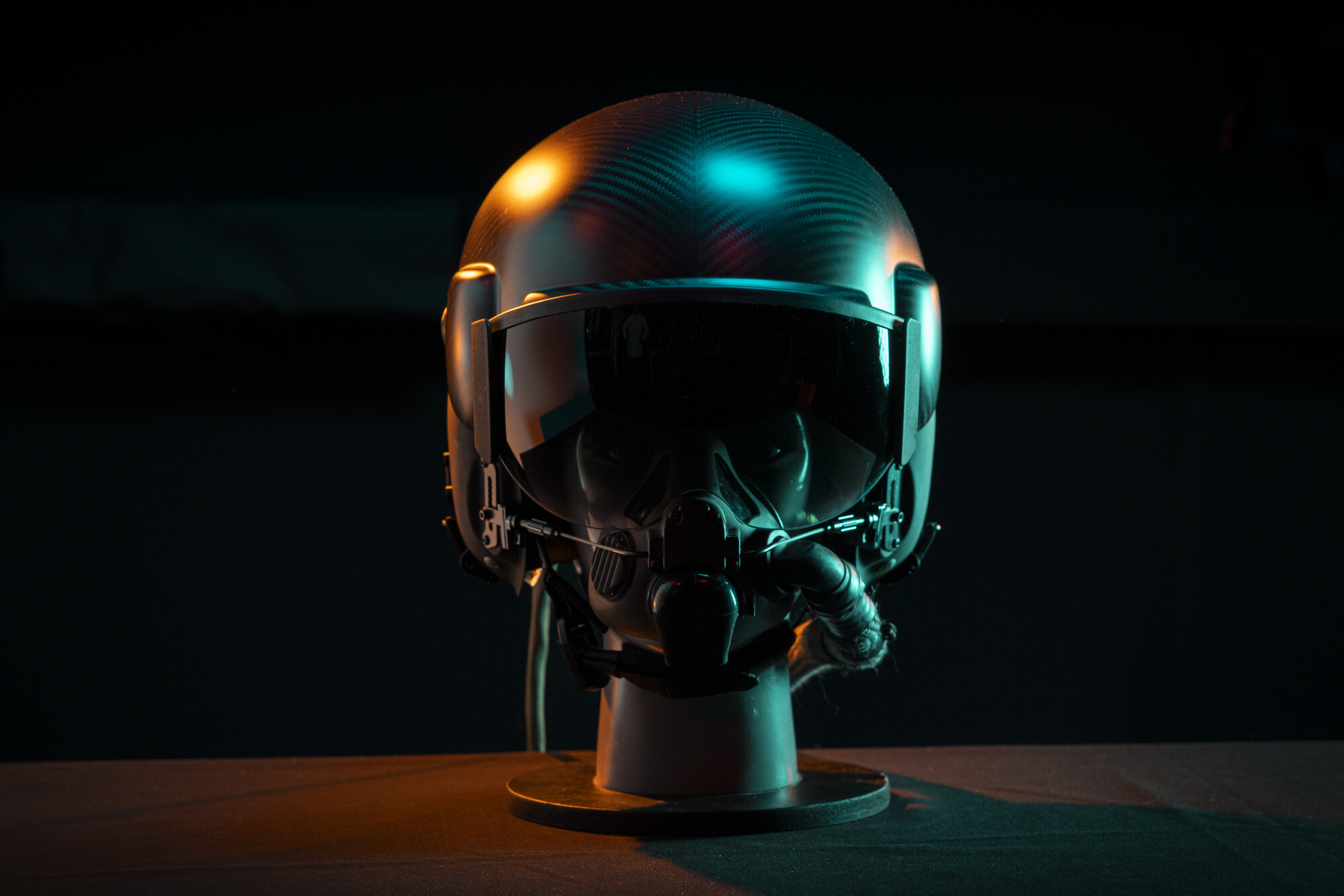
The BAE Project Intuity pilot helmet is being shown publicly for the first time at Farnborough International Airshow from July 20 through July 24, 2026. The dark visor and smooth shell make the demonstrator look like a science-fiction prop. Its practical idea is easier to understand: filter a large stream of information, place the most useful cues in the pilot’s natural field of view, and connect those cues to where the pilot is looking and listening.
BAE Systems describes Project Intuity as a modular testbed for future helmet-mounted systems. It combines crew protection, a wide-area display, head tracking, 3D audio cueing, and an architecture intended to evolve. The company also says the platform can be used to explore display optics and eye tracking.
This distinction is important: Project Intuity is a demonstrator, not a confirmed production helmet or a deployed autonomous-drone controller. BTI did not attend Farnborough, operate the system, inspect its software, or verify BAE’s display, weight, workload, tracking, cueing, or drone-command claims. The detailed specifications in this guide are company descriptions, not independent BTI test results.
- The visor is meant to keep priority information in front of the pilot instead of adding another place to look.
- Head tracking and 3D audio can attach a cue to a direction around the aircraft.
- BAE says the demonstrator has twice the display area and quad high-definition resolution compared with current helmet-mounted systems.
- The biggest open question is not how futuristic it looks, but whether its filtering reduces workload without hiding or adding the wrong information.
Want the quick version next time?
Follow @besttechinsight for fast, source-backed explanations of new products, chips, AI, robots, EVs, and science. The detailed guide stays here on BTI.
Project Intuity: the quick answer
A modern pilot may receive information from the aircraft, radar, other sensors, nearby aircraft, and future collaborative drones. Showing all of it at once would create a wall of symbols. Project Intuity is BAE’s testbed for a different approach: prioritise the data, project selected cues into a wide visor, track the helmet’s direction, and use directional audio to draw attention without requiring another cockpit-screen check.
The helmet is therefore an interface between a person and a much larger network. BAE says this type of interface could help pilots command fleets of drones. The public material does not show the exact controls or establish how much those aircraft would do autonomously, so the conservative description is supervision and cueing research for future collaborative aircraft.
| Layer | BAE description | Plain English | Evidence boundary |
|---|---|---|---|
| Data filter | Prioritises information before presenting it | The system is meant to reduce a crowded stream of aircraft, sensor, and collaborative-platform data to the items a pilot needs now. | BAE has not published the filtering rules, error rates, or an independent workload study for this demonstrator. |
| Wide visor display | Projects integrated visual information into the pilot’s field of view | Important cues can stay in front of the pilot instead of requiring another glance down at a cockpit screen. | A larger display does not by itself prove that every cue is useful, readable, or safe in flight. |
| Head tracking and 3D audio | Tracks where the helmet points and can place directional audio cues | The interface can connect a visual or sound cue to a direction around the aircraft. | The public material does not provide latency, accuracy, distraction, or operational-test results. |
| Future input layer | Provides a testbed for display optics and eye-tracking work | Future versions could study what the pilot is looking at and how the display should respond. | BAE describes eye tracking as a capability to explore and mature, not as a proven deployed feature. |
Why the helmet starts with filtering, not display size
A larger, sharper display can show more information, but the pilot still has the same amount of attention. That makes prioritisation the central design problem. A useful system has to decide which alert, route, sensor track, aircraft state, or collaborative-platform cue deserves space now and which item can wait.
BAE says Project Intuity is designed to filter, prioritise, and present data. That wording matters because the opposite approach would simply move cockpit clutter onto the visor. Good filtering could reduce head movement and help a pilot notice a time-sensitive cue. Bad filtering could hide a critical detail or repeatedly interrupt the pilot with low-value information.
The checked public pages do not describe the ranking logic, how a pilot overrides it, how errors are measured, or how the interface behaves when sources disagree. Those questions belong in later human-factors and operational testing. A polished demonstrator can show the intended interaction, but it cannot substitute for evidence across lighting, motion, fatigue, failures, and high-workload scenarios.
What the visor, head tracking, and 3D audio each add
The visor is the visual layer. BAE describes twice the display area of current helmet-mounted systems, quad high-definition resolution, and an extended field of view. In plain English, the concept gives designers a broader and more detailed canvas for symbols and sensor imagery. BAE does not identify the comparison baseline or publish an independent readability result, so those figures should be treated as company specifications.
Head tracking supplies direction. If the system knows where the helmet points, it can keep a cue aligned with an object or area around the aircraft. The pilot can turn toward a direction and maintain context without translating between a fixed screen and the outside view.
3D audio adds another directional channel. A sound can suggest that attention is needed to the left, right, above, or behind without filling more of the visor. That does not automatically reduce workload: the timing, urgency, repetition, and relationship between visual and audio cues all need careful design. The public sources do not provide measured distraction or response-time results.
What BAE has shown, and what is still unknown
The most useful way to read a future-tech demonstrator is to keep every conclusion no larger than the evidence. BAE has published a real helmet image, a system description, and a current Farnborough display. It has not published a complete production specification or independent operational test.
| Public detail | Useful takeaway | Not established |
|---|---|---|
| BAE says the demonstrator has twice the display area of current helmet-mounted systems | The concept is trying to put more useful context inside the pilot’s natural field of view. | No independent comparison, exact baseline helmet, or operational readability result is published. |
| BAE describes quad high-definition resolution and an extended field of view | More display detail can support smaller symbols and a broader visual workspace. | The public page does not establish effective resolution in every lighting, motion, or mission condition. |
| The system combines protection, a wide-area display, head tracking, and 3D audio cueing | Project Intuity is a whole interface testbed, not only a screen mounted on a helmet. | BAE has not published a complete production specification, certification result, or fielding schedule. |
| BAE says the architecture could help pilots command fleets of drones | Future combat aircraft may need one person to supervise several collaborative aircraft while still flying. | The checked sources do not describe exact command modes, autonomy levels, safety validation, or a deployed fleet. |
How a pilot could command drones without flying every drone
BAE’s announcement says the technology is intended to help pilots command fleets of drones. The beginner-friendly model is not one joystick per aircraft. A future collaborative aircraft can handle lower-level flight control while the pilot gives a higher-level instruction, approves an option, changes a priority, or redirects attention.
The helmet’s possible role is to make that supervision legible. It could show where a collaborative aircraft is, what it reports, whether it needs a decision, and which option the system recommends. Head tracking or future eye tracking might help select a direction or item, while audio could call attention to a change outside the pilot’s current view.
That is a design direction, not proof of a finished command system. The checked sources do not say how many aircraft one pilot can supervise, which actions require confirmation, how communications loss is handled, what autonomy is installed, or how the system prevents an incorrect cue from becoming an unsafe command.
Why eye tracking is a future layer, not the headline claim
Eye tracking could help an interface understand which symbol or region has the pilot’s attention. It might reduce manual selection, support training research, or help the display avoid covering an important area. It could also create new failure modes if a glance is mistaken for a command.
BAE describes Project Intuity as a platform to explore and mature eye tracking and display optics. That is narrower than saying the current demonstrator uses gaze as a validated control. BTI therefore does not claim that looking at a drone commands it, that eye tracking is operational, or that the helmet has passed any public safety or certification threshold.
Five questions to ask about the next smart-helmet demo
- What information is being filtered? Ask which sources feed the display and how conflicts are handled.
- What can the pilot override? A useful assistant should preserve a clear path to inspect, reject, or reprioritise a cue.
- What does a gaze, head turn, or voice action actually command? Selection, approval, and direct control are different things.
- How was workload measured? A larger display can help or hurt depending on timing, layout, and alert discipline.
- Is this a demonstrator, prototype, qualified product, or deployed system? Those stages carry very different evidence.
Sources and reporting boundary
This guide relies on BAE Systems’ official announcement, product page, media schedule, and press asset, plus the official Farnborough event source. Detailed capabilities remain company descriptions. BTI found no public independent operational evaluation for Project Intuity and does not present the demonstrator as a fielded product.
- BAE Systems Project Intuity Farnborough announcement: Primary company source for the July 20-24 public display, the information-filtering goal, the drone-command concept, and the demonstrator boundary.
- BAE Systems Project Intuity product page: Primary company source for the display-area, resolution, head-tracking, 3D-audio, architecture, and future eye-tracking descriptions.
- BAE Systems Farnborough media schedule: Official event-day context for BAE’s Farnborough briefings and advanced-air-technology demonstrations.
- Farnborough International Airshow: Official show source for the current July 20-24, 2026 aerospace event.
- BAE Systems Project Intuity press asset: Company-provided media image used by BTI for factual organic editorial coverage.
BAE Project Intuity pilot helmet FAQ
What is Project Intuity?
Project Intuity is BAE Systems’ modular demonstrator for future fighter-pilot helmet-mounted systems. BAE says it combines protection, a wide-area visor display, head tracking, 3D audio cueing, and a future-ready architecture.
Is Project Intuity a finished production helmet?
No public source checked by BTI establishes a production order, fielding date, certification, price, or complete production specification. BAE calls it a demonstrator and modular testbed.
Does the helmet let one pilot control a fleet of drones?
BAE says the technology is intended to help pilots command fleets of drones, but the public material does not define the control modes, autonomy levels, aircraft count, safety validation, or deployed capability. BTI treats this as a future interface goal.
Does Project Intuity use eye tracking?
BAE says the demonstrator provides a platform to explore and mature eye tracking. That does not establish eye tracking as a validated operational control in the current public system.
What is new at Farnborough 2026?
BAE says the Project Intuity demonstrator is on public display for the first time at Farnborough International Airshow from July 20 through July 24, 2026. BTI did not attend or test it.
BTI final take
The memorable object is the black helmet. The more important technology is the attention system around it. Future aircraft can produce far more information than one person can inspect, so the interface has to choose what appears, where it appears, and how urgently it asks for attention.
Project Intuity is interesting because it makes that problem visible. The right next evidence is not a more dramatic render. It is measured workload, reliable tracking and cueing, clear pilot override, safe collaborative-aircraft supervision, and an honest path from demonstrator to qualified product.