
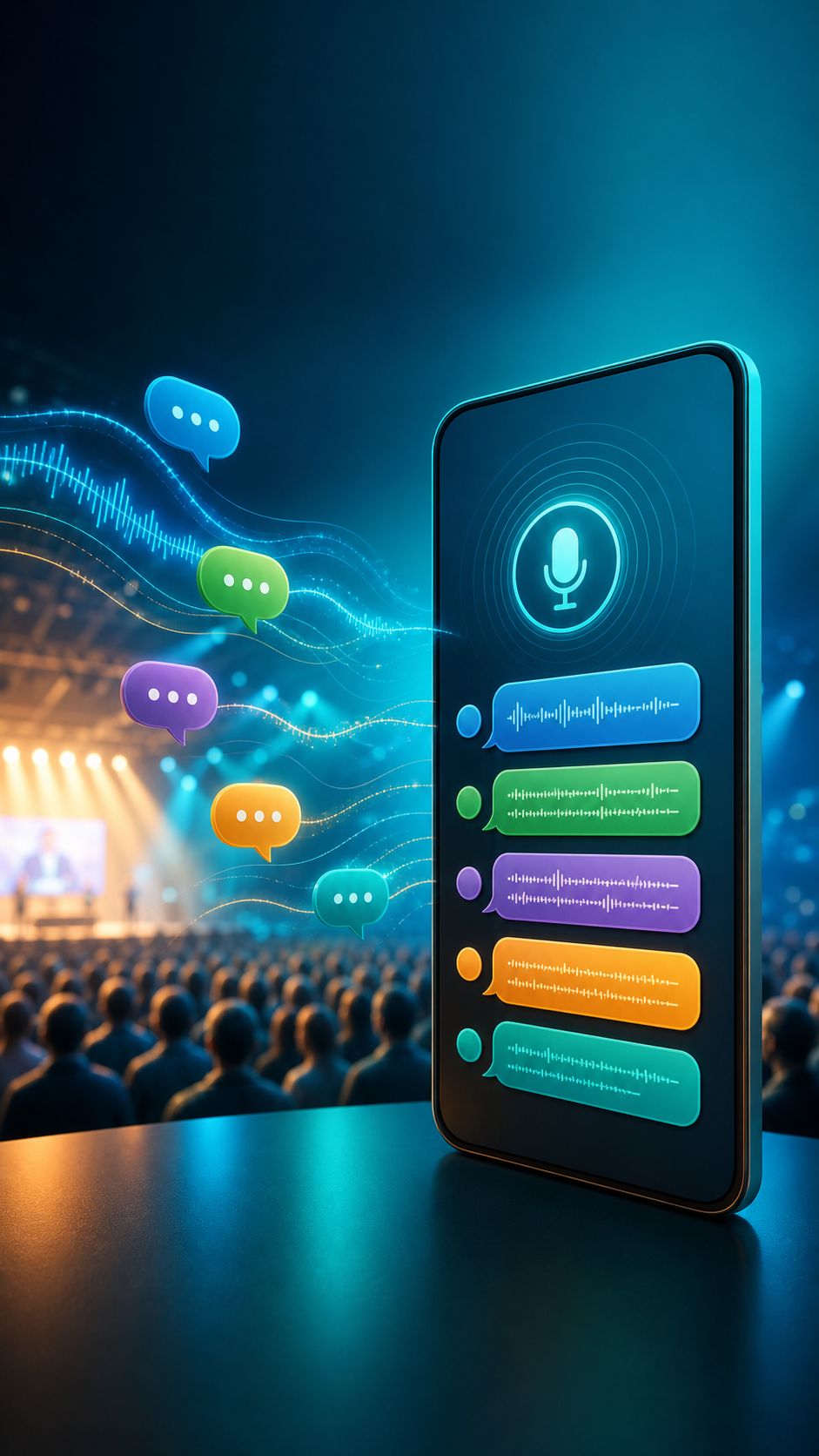
Voice AI explainer
DeepL Mixhalo Voice AI Explained: Why Live Translation Needs Fast Audio
The simple version: live translation is not only a language problem. It is also an audio timing problem.
DeepL Mixhalo voice AI sounds like an enterprise software story, but the normal-person version is much easier. If a speaker talks on stage and a listener reads or hears the translation too late, the translation may be technically impressive and still feel awkward.
DeepL announced on June 17, 2026 that Mixhalo’s team and technology joined DeepL as the company expands its voice AI work and opens a San Francisco office. Mixhalo’s public pitch is live-event audio: taking sound from an event and delivering it to phones in real time. DeepL’s public explanation says the goal is to bring ultra-low-latency live audio into voice translation.
BTI did not test DeepL Voice, Mixhalo, event hardware, translation accuracy, latency, or enterprise deployment. This guide does not make price, availability, review, ranking, endorsement, customer-success, or hands-on testing claims. It translates the public announcement into the plain-English checks that matter before anyone treats live AI translation as solved.
BTI on InstagramNew tech, decoded in plain EnglishFollow @besttechinsight for quick breakdowns of products, chips, robots, EVs, and science. Full reviews and guides stay here on BTI.
DeepL Mixhalo voice AI quick answer
The important idea is not that an AI system can translate words. Many tools can translate text or speech. The harder idea is live timing. A translated caption, voice track, or support reply has to arrive close enough to the original speech that the conversation still feels connected.
Think about a conference keynote. The speaker makes a joke, changes slides, names a product, and answers a question from the room. If the translation lags behind the room, the listener is always catching up. That is why audio infrastructure matters. It controls how quickly clean sound reaches the system and how quickly the translated output can reach the audience.
Mixhalo is interesting in this story because its work comes from live events, not only normal meeting software. A concert, sports venue, or large conference has a different problem from a laptop meeting. There can be thousands of people, noisy rooms, wireless networks, different phones, and very little patience for delay.
| Check | Plain-English role | Why it matters |
|---|---|---|
| Latency | How quickly the sound or translation reaches the listener. | A translation that arrives late can make a live talk, concert, or support call feel broken even if the words are correct. |
| Audio path | The route from microphone or soundboard to phone, captions, or headset. | Live-event audio is not the same as recording a meeting from a laptop speaker. The path has to stay clear at scale. |
| Language context | The topic, names, terms, and tone the translation system must understand. | A keynote, sports event, customer-support call, and concert all create different translation problems. |
| Captions or voice | Whether the output is text, translated speech, or both. | Captions can be easier to review. Translated speech can feel more natural but has less room for mistakes. |
| Human fallback | How people recover if the translation, timing, or device setup fails. | BTI treats real-time translation as helpful infrastructure, not magic. A live setup still needs a backup plan. |
The hidden part is latency
Latency is delay. In live translation, delay is the difference between following the moment and feeling behind the room. A tiny delay can be fine for a caption that helps you confirm a sentence. A bigger delay can break a conversation, a panel, a demo, or a live-event experience.
That is why this announcement is not just about adding another AI model. The public DeepL blog frames Mixhalo around ultra-low-latency audio delivery. In plain English, that means getting sound to people quickly enough that the experience still feels live.
For a normal reader, the lesson is useful beyond DeepL. Every real-time AI product has a hidden pipe. The app may look like magic, but a live translation experience depends on microphones, audio streams, networks, models, captions, devices, and recovery paths.
Why live events are harder than meetings
Meetings are controlled compared with live events. A meeting usually has a known set of people, devices, apps, and speakers. A live event can have a stage, soundboard, audience noise, many languages, many phones, and people moving around the venue.
That makes the product problem more physical. Can the audio feed stay clean? Can the network handle the crowd? Can the translation keep up with a fast speaker? Can captions stay readable? Can a listener recover if a phone, signal, or app misbehaves?
Those are the questions that separate a neat demo from a useful system. BTI’s takeaway is not that live AI translation is finished. The takeaway is that voice AI is moving from “can it translate a sentence?” toward “can it work in the messy places where people actually listen?”
What this announcement does not prove
The DeepL and Mixhalo announcement does not prove that every event, meeting, classroom, or support desk can use live AI translation today without tradeoffs. It also does not prove translation accuracy, latency, device support, language coverage, price, or deployment readiness for any specific reader.
That caution matters because voice AI demos can feel magical. The real test is the whole experience: clear source audio, understandable captions or voice output, fast delivery, good context, privacy rules, and a fallback when the system misses something important.
So BTI’s practical stance is simple. Treat the announcement as a useful signal about where voice AI is going, not as a universal buying recommendation or a claim that human interpreters are no longer needed.
The beginner version: sound first, translation second
Most people think translation starts with language. In a live environment, it starts with sound. The system needs a clean enough signal to understand what was said. It then needs enough context to choose the right meaning. After that, it has to send the result back quickly enough to feel useful.
That is why “voice AI” can mean several different things. It can mean speech recognition, machine translation, translated voice output, captions, summarization, or live audio delivery. A good product may need more than one of those pieces working together.
DeepL is known for language AI. Mixhalo is known for live-event audio delivery. Put those together and the story becomes clearer: the company is trying to make translated speech and captions work in larger, more complex settings.
Five questions before trusting real-time translation
1. Is it captions, voice, or both?
Captions can be easier to review because the listener can scan back and catch a term. Translated voice can feel more natural, but the listener may not see a mistake. A live product should be clear about which experience it is promising.
2. What happens when the room gets noisy?
Noise changes the problem. A quiet meeting and a crowded event are not the same. If the source audio is messy, the translation system has a harder job.
3. How close to live is close enough?
Different uses need different timing. A keynote caption can lag slightly and still help. A two-person conversation, live support call, or emotional speech may need tighter timing.
4. Can it handle names and technical terms?
Product names, speaker names, acronyms, slang, and domain-specific terms can make a translation feel wrong even when the grammar is good. Real-world voice AI needs context, not only vocabulary.
5. Is there a human fallback?
For important events, meetings, and support workflows, AI translation should have a recovery plan. That might mean a human interpreter, written notes, post-event transcripts, or a way to correct terms.
Source links for this guide
- DeepL press release on Mixhalo and Silicon Valley expansion: DeepL says Mixhalo’s team and technology joined DeepL to support real-time voice translation for larger live environments.
- DeepL blog on bringing Mixhalo onto the platform: DeepL explains the live-audio timing problem and why ultra-low-latency audio matters for voice translation.
- Mixhalo live-event audio page: Mixhalo describes a live-event audio platform for real-time audio, interpretation, transcription, summaries, and phone delivery.
- DeepL press page: DeepL’s press page lists the Mixhalo update among current company announcements.
- TechCrunch coverage: TechCrunch frames the move as live-event audio streaming and translation, useful context for the normal-reader hook.
For related plain-English AI context, read BTI’s AI shopping agents guide and AI factory tokens explainer.
BTI take
The DeepL and Mixhalo story is interesting because it shows where AI products are going next. The hard part is no longer only the model. The hard part is whether the whole system works in the moment.
Real-time translation has to feel natural, timely, and recoverable. The technology stack behind that experience includes live audio, speech recognition, translation, output timing, captions, and device delivery.
That is the useful way to read the announcement. Do not ask only whether AI can translate words. Ask whether the translated experience arrives soon enough, clearly enough, and reliably enough to help the person in the room.
FAQ
Did BTI test DeepL Voice or Mixhalo?
No. BTI did not test DeepL Voice, Mixhalo, live-event audio, latency, translation quality, or enterprise deployment. This guide explains public source material in plain English.
Why does live translation need low latency?
Because delayed translation can make a live talk, conversation, event, or support call feel disconnected. The words may be useful, but timing decides whether the experience feels live.
Does this mean AI translation is solved?
No. Real-time translation still depends on audio quality, context, network conditions, device delivery, language support, and human fallback for important moments.
BTI on Instagram
Follow the next plain-English tech explainer
BTI turns current chips, AI, power, space, and buyer-tech stories into beginner-friendly carousels before the topic gets buried in jargon.