
Home robotics
Isaac 1 Home Robot Explained: What It Does and What to Check
A practical robot story is more useful than a humanoid demo: what jobs can it finish, when can a person step in, and what enters the home with it?
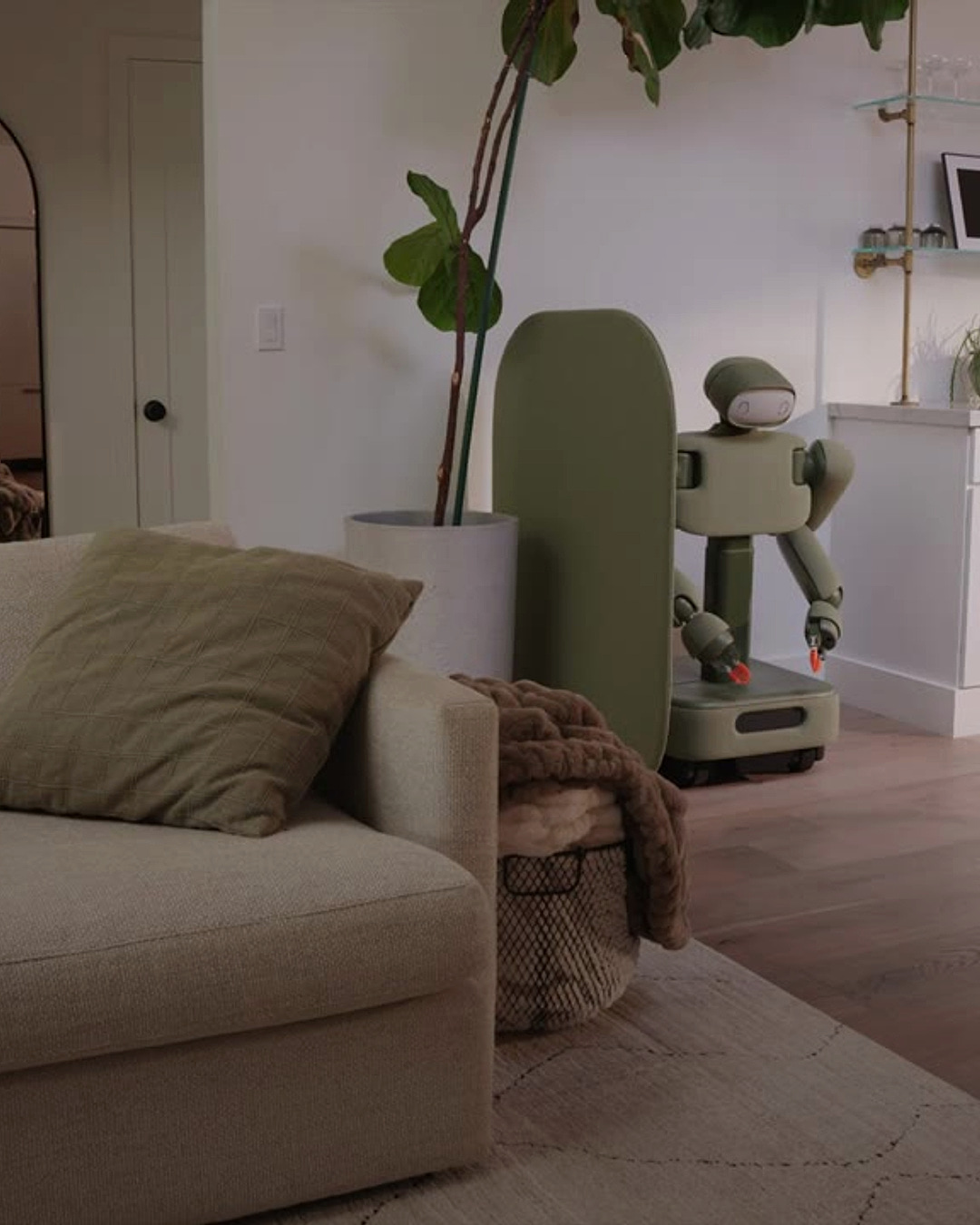
The Isaac 1 home robot is Weave Robotics’ mobile follow-up to its stationary laundry-folding machine. Instead of trying to look or walk like a person, Isaac 1 uses wheels, two arms, a collapsible torso, and a soft outer shell. Weave organizes the product around two promises: Laundry Flow and Daily Reset.
That is a refreshingly concrete pitch. Laundry Flow is described as finding dirty clothes, moving hampers, folding, and putting clothes away. Daily Reset is described as making beds, fixing pillows and blankets, and returning toys, shoes, and clutter to their places. Those are company-stated capabilities, not BTI test results.
This guide was checked against Weave’s public pages on July 11, 2026. BTI has not used Isaac 1, watched an independent in-home trial, verified task-completion rates, or confirmed delivery for any buyer. Product behavior, software, prices, terms, and rollout timing can change. Treat the current pages and a live demonstration in your own environment as the deciding evidence.
Isaac 1 quick answer
Isaac 1 is interesting because it is designed around ordinary rooms and repetitive chores rather than a stage demonstration. The wheeled base favors stability and a predictable footprint. The torso extends when the arms need height and collapses when the robot is at rest. Physical camera shutters are meant to make the camera state visible.
The important qualification is in Weave’s own wording: Laundry Flow and Daily Reset are autonomous by default, with teleoperation assistance when needed. In plain English, the robot is intended to do the job itself, but a remote person may help when it gets stuck. That can make a service more reliable, but it also turns operator access, camera visibility, data handling, and stop controls into buyer questions.
The useful buying decision is therefore not “robot or no robot.” It is whether Isaac 1 can complete your exact chores in your exact rooms, with a level of remote assistance and data access your household accepts.
Isaac 1 home robot: company statement versus buyer check
| Area | What Weave states | What a buyer should check |
|---|---|---|
| Laundry Flow | Find and pick up dirty clothes, handle loaded hampers, fold clothes, and put them away. | Ask to see a full, uncut cycle with the fabrics, hamper, washer, drawers, and room layout in your home. |
| Daily Reset | Make beds, straighten pillows and blankets, and return toys, shoes, and clutter to their places. | Define which objects and storage locations are supported, plus what happens when the room changes. |
| Movement and reach | A wheeled base, a 20.5 by 22 inch footprint, a collapsible 3 foot to 5 foot 9 inch body, and an 80 inch vertical reach. | Measure thresholds, rugs, narrow paths, furniture gaps, stairs, shelves, and charging space before ordering. |
| Autonomy | Laundry Flow and Daily Reset run autonomously by default, with teleoperation assistance when needed. | Ask how often assistance is expected, who can connect, what the operator can see, and how an owner stops a session. |
| Privacy and control | Physical camera shutters, visible operating cues, and scheduled or on-demand control through a companion app. | Review the current privacy policy, data retention, account security, camera behavior, remote access, and deletion controls. |
What does Isaac 1 say it can do?
Laundry Flow covers more than folding. Weave says Isaac 1 can locate and pick up dirty clothes, handle a loaded hamper, fold clothing, and put items away. The page says that loading or unloading a washer or dryer may be possible depending on the home. That last sentence is conditional, so a buyer should not read it as universal appliance support.
Daily Reset moves the product beyond laundry. Weave lists bed making, pillow and blanket adjustment, and returning toys, shoes, and clutter to their places. Each task depends on object recognition, gripping, reach, navigation, and a remembered destination. A polished clip can show that a task is possible; an uncut demonstration shows whether it works repeatedly in a particular room.
Ask for a demonstration with the awkward parts left in: mixed fabrics, a nearly full hamper, a fitted sheet, a toy under furniture, a moved storage bin, a rug edge, a narrow doorway, and an unexpected person entering the room. Those are not claims that Isaac 1 fails. They are the normal conditions that separate a useful household workflow from a controlled demo.
Why does Isaac 1 roll instead of walk?
Legs can climb and step, but they add moving parts and balance problems. Weave instead describes a wheeled base as passively stable. For flat indoor floors, that can keep the robot’s weight supported while the arms work. The published footprint is 20.5 by 22 inches, so the first buyer exercise is a tape-measure tour through doorways, furniture gaps, laundry areas, and the charging location.
The body is listed as collapsing to 3 feet and extending to 5 feet 9 inches, with an 80-inch vertical reach and 38-inch horizontal reach. Those dimensions help a buyer estimate shelves and bed surfaces, but reach on paper does not guarantee access around furniture or safe handling of every object.
Weave’s public Isaac 1 page does not present the robot as a stair climber. A multistory home should therefore ask how many floors one unit can serve, whether owners must move it, what it weighs, and where it can safely charge. A wheeled design may be exactly right for one open floor and a poor fit for a narrow, split-level layout.
Autonomous by default does not mean nobody can step in
Autonomy means the software senses the environment, chooses actions, and controls the robot without a person directing every movement. Teleoperation means a person can remotely view or control some part of the task. Weave says Isaac 1 uses autonomy by default for Laundry Flow and Daily Reset, with teleoperation assistance when needed to complete tasks.
That hybrid approach can be sensible for an early home robot. A remote helper may recover a task that would otherwise stop at one unusual shirt or room layout. The tradeoff is that the household needs clear answers about when a connection begins, whether the owner is notified, which sensors are available, whether audio is included, how sessions are logged, who the operators are, and how quickly access can be disabled.
A buyer should also ask for a realistic assistance range rather than a perfect percentage. How often did comparable homes need help last week? What types of tasks triggered it? Does the service still work if the network drops? What happens to a half-finished task? Weave’s public product page does not answer all of those operational questions, so they belong in the demo and contract review.
What should a home-robot privacy check include?
Isaac 1 uses cameras and an app to work in private spaces. Weave highlights physical camera shutters and cues that show when the robot is working. Physical cues are useful because a person in the room can understand them without opening an app. They are one layer, not the entire privacy model.
Before ordering, read the current privacy policy and ask what images, video, audio, maps, object labels, task history, device identifiers, and account information leave the home. Ask how long each category is retained, whether it is used to improve models, whether a person can review it, which vendors receive it, and how an owner exports or deletes it.
Account security matters too. Use a unique password and every available multi-factor option. Confirm how household members are invited, how old devices are removed, how remote sessions are authenticated, and whether a stolen phone can start or view a task. For bedrooms or children’s spaces, decide the household rule before the robot arrives rather than after a camera-equipped device is already scheduled there.
What does Weave currently list for price and rollout?
As checked on July 11, 2026, Weave’s order page lists a $449 monthly subscription or a $7,999 upfront purchase, with a fully refundable $250 deposit. It also lists an optional premium membership with the upfront route. Those are manufacturer-listed terms, not an affiliate offer, a BTI deal, or a promise that the same options will be available later.
Weave says first Isaac 1 deliveries begin in California in fall 2026, followed by broader United States availability through 2027. A planned window is not a delivery date for a specific address. Before paying, read the current pre-order agreement. Check refund mechanics, ask what can change between reservation and delivery, and get the expected date and included service in writing.
The order page says customers can arrange an in-person or remote demonstration as delivery approaches. Use that opportunity to test the real environment. Bring a list of chores, room measurements, privacy questions, service expectations, and cancellation terms. The product should earn the purchase through a repeatable workflow, not through the novelty of a robot moving in a living room.
How BTI evaluated the Isaac 1 announcement
BTI separated three evidence layers. First, the product and order pages support what Weave currently states about functions, dimensions, controls, price, and rollout. Second, the privacy policy and pre-order agreement are the documents buyers should inspect for data and transaction terms. Third, the buyer checklist identifies information that the public product page does not by itself prove.
BTI did not convert manufacturer language into a review score, recommendation, award, availability guarantee, or performance result. We did not infer stair climbing, universal washer compatibility, zero human assistance, or private-by-default operation. The article will be updated when primary sources materially change or when credible independent in-home evidence becomes available.
BTI’s simple Isaac 1 rule
Judge the finished chore. Pick one painful workflow, such as gathering, folding, and putting away a normal load of laundry. Ask to see the entire workflow in a similar home, including recovery from one mistake. Then check privacy, remote assistance, service, price, and delivery terms.
Isaac 1 is worth watching because it gives home robotics an understandable job. The next proof is not a more dramatic demo. It is whether ordinary households can rely on that job without accepting surprises about rooms, remote access, service, or cost.
Isaac 1 home robot FAQ
What is the Isaac 1 home robot?
Isaac 1 is Weave Robotics’ wheeled mobile robot for household tasks. Weave groups its stated capabilities into Laundry Flow and Daily Reset.
Can Isaac 1 fold and put away laundry?
Weave says Laundry Flow can find and pick up dirty clothes, handle hampers, fold clothes, and put them away. BTI has not independently tested those tasks, so buyers should request an uncut demonstration in a comparable home.
Is Isaac 1 fully autonomous?
Weave says Laundry Flow and Daily Reset operate autonomously by default, with teleoperation assistance when needed. Buyers should ask how often people assist, what they can see, and how remote access is controlled.
Can Isaac 1 climb stairs?
Weave’s public Isaac 1 product page describes a wheeled base and does not claim stair climbing. Multistory households should ask about the supported floor plan and how the unit can be moved.
How much does Isaac 1 cost and when does it ship?
As checked July 11, 2026, Weave lists $449 per month or $7,999 upfront, plus a refundable $250 deposit. It says California deliveries begin in fall 2026 and broader U.S. availability follows through 2027. Verify the current order page and agreement because prices, terms, and timing can change.
Sources for this Isaac 1 home robot update
- Weave Robotics Isaac 1 product page: Primary source for Laundry Flow, Daily Reset, dimensions, power, app control, camera cues, autonomy, teleoperation assistance, and rollout language.
- Weave Robotics Isaac 1 order page: Primary source checked July 11, 2026 for the listed payment choices, refundable deposit, and stated delivery sequence.
- Weave Robotics company and product history: Primary source for how Weave describes the progression from the stationary Isaac 0 to the mobile Isaac 1.
- Weave Robotics privacy policy: The current policy a buyer should read before allowing an app-connected, remotely assisted robot into a home.
- Weave Robotics pre-order agreement: The current terms to review for reservation, cancellation, delivery, and product-change details.
Follow BTI for the next plain-English tech breakdown
BTI turns current tech stories into simple buyer and science explainers without claiming hands-on testing, prices, ratings, or availability.