
AI for Good 2026
XPeng ARIDGE Flying Car Explained: How the Land Aircraft Carrier Works
The name makes it sound like one car that suddenly grows wings. The useful explanation is simpler: it is a road carrier plus a separate aircraft.
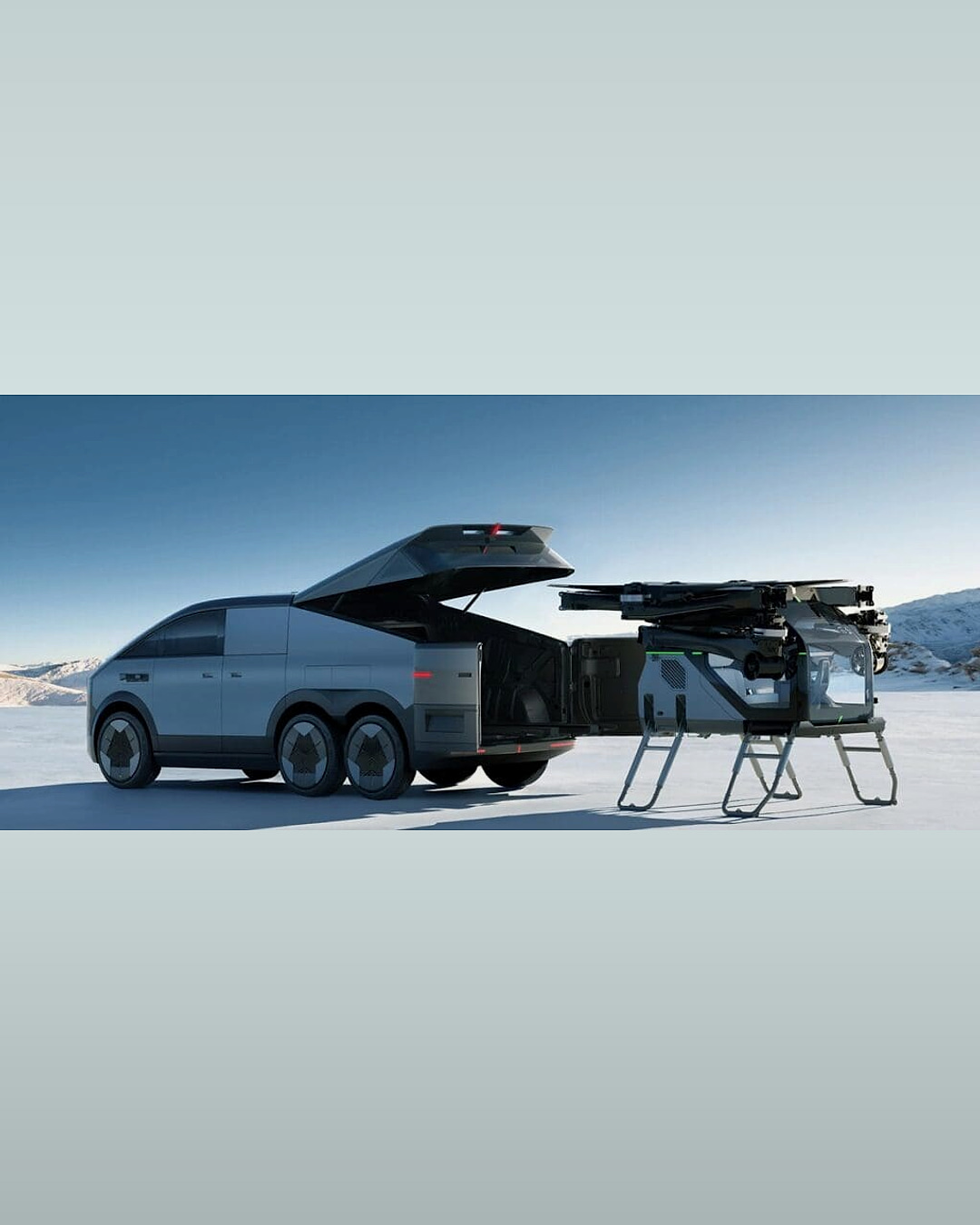
The XPeng ARIDGE flying car is actually two vehicles. Its Land Aircraft Carrier combines a six-wheel ground module with a detachable electric vertical-takeoff-and-landing aircraft, commonly shortened to eVTOL. The road module carries the aircraft. The air module separates before flight.
That distinction matters because a dramatic flying-car headline can hide the real workflow. A trip would involve driving the combined system to a legal launch location, separating the aircraft, completing the flight under aviation rules, landing at another suitable site, and reconnecting the modules. It is closer to a mobile aircraft base than a normal car that lifts off in traffic.
ARIDGE appeared in the official exhibitor directory for the AI for Good Global Summit held in Geneva from July 7 through July 10, 2026. The International Telecommunication Union said the summit included more than 200 technology demonstrations. BTI checked the ARIDGE, ITU, XPeng, and FAA sources linked below on July 11, 2026.
What is the ARIDGE Land Aircraft Carrier?
The ground module is the large six-wheel vehicle. It stores and transports the aircraft module at the rear. Official imagery shows the carrier driving with the aircraft enclosed and stopping with the aircraft deployed behind it. The ground vehicle does not become the aircraft; it remains on the ground.
The detachable module is the part that flies. It uses multiple electric rotors to take off and land vertically, so it does not need a conventional runway in the way an airplane does. Vertical takeoff does not mean any empty patch of pavement is automatically a legal or safe launch site. Aircraft, airspace, surface, approach-path, weather, and local operating rules still matter.
AI for Good describes the system as having one-button automatic separation and reconnection in under five minutes, with manual and automatic control modes. That is an exhibitor and company-backed claim, not an independent BTI timing test. It tells us the intended user flow; it does not establish how the process behaves on every surface or in every condition.
ARIDGE flying car: confirmed idea versus missing proof
| Normal-person question | What the current sources establish | What a real trip still needs |
|---|---|---|
| What drives on the road? | A separate six-wheel ground carrier transports the aircraft module. | Road certification, licensing, insurance, parking dimensions, charging, and market-specific rules. |
| What actually flies? | A detachable electric vertical-takeoff-and-landing aircraft module. | Aircraft certification, approved operating limits, independent performance evidence, and local pilot or operator requirements. |
| How do the modules separate? | AI for Good describes one-button automatic separation and reconnection in under five minutes. | Independent repeatability, surface requirements, weather limits, inspections, and failure recovery. |
| Where could it take off? | The aircraft is shown operating separately from the road carrier. | A legal takeoff and landing site, usable airspace, safe approach paths, local permission, and suitable weather. |
| Can a U.S. buyer use one now? | The sources checked describe a China-focused 2026 production and delivery plan. | U.S. sale, road approval, aircraft certification, operating approval, support, and a buyer delivery date. |
How would the two-module trip work?
Step one: drive. The carrier moves the aircraft by road. That solves one practical problem faced by many small aircraft: getting the machine, its charging plan, and its passengers from a home or storage site to an approved flight location. It also creates normal vehicle questions about width, turning space, parking, road approval, service, and insurance.
Step two: deploy. At a suitable site, the ground module opens and the aircraft moves out. AI for Good says the modules can separate and reconnect automatically in under five minutes. A buyer or operator would still need the operating manual’s requirements for slope, surface strength, clearance, wind, inspection, bystanders, and what happens when the automated sequence stops.
Step three: fly. The air module takes off vertically and operates as an aircraft. The ARIDGE and XPeng sources describe this product around individual short-haul flight. They do not turn it into an unrestricted door-to-door vehicle. The pilot or operator, aircraft approval, route, airspace, weather, reserve energy, takeoff site, and destination all need to be valid for the flight.
Step four: reconnect. The intended system becomes most useful when the aircraft can return to the same carrier or meet a compatible ground module at the destination. That raises an important practical question the launch imagery cannot answer by itself: does the aircraft have to return to the road vehicle, or will a network of carriers and approved sites exist?
What does eVTOL mean in plain English?
eVTOL means electric vertical takeoff and landing. Electric motors turn multiple rotors. The aircraft can rise and descend without a runway, then move through the air for a shorter trip. The concept sits between a helicopter and an electric vehicle, but it is still aviation.
Multiple rotors can make the shape look like a very large camera drone. Passenger flight changes the stakes. The aircraft needs an approved design and operating envelope, trained people, maintenance, inspections, energy reserves, emergency procedures, and rules for sharing airspace. A polished autonomous mode does not remove those system requirements.
Weather matters more than a product render suggests. Wind, visibility, precipitation, temperature, and battery condition can all affect whether an electric vertical flight is allowed or sensible. BTI is not assigning operating limits because the public sources checked do not provide a complete, independently verified operating handbook for a U.S. buyer.
The hard part is not takeoff
Seeing an aircraft rise is the visually impressive part. Building a repeatable transport service requires the less dramatic pieces to line up: aircraft certification, road approval for the carrier, trained operators, usable airspace, takeoff and landing infrastructure, charging, maintenance, insurance, emergency response, noise rules, and local acceptance.
The FAA’s powered-lift rule is a useful U.S. example of that larger system. It addresses pilot certification, training, and operating rules for aircraft that combine airplane and helicopter characteristics. FAA advanced-air-mobility guidance also covers vertiport geometry, approach and departure paths, load-bearing areas, charging, and airspace review. Those U.S. sources do not certify ARIDGE or describe Chinese approval; they show why a flight-capable product needs much more than a working rotor system.
For a normal buyer, the best question is not simply “Can it fly?” Ask where it can legally launch, who can operate it, how the two modules are maintained, which weather cancels a trip, how reserve power is calculated, and what support exists when either half of the system cannot continue.
What is confirmed, and what is not?
Confirmed from the sources checked: ARIDGE presents the Land Aircraft Carrier as a modular ground-and-air system. The ground carrier and aircraft are separate machines. AI for Good says the modules use an automatic separation and reconnection system, names manual and automatic operating modes, and describes a China-focused 2026 mass-production and delivery plan. XPeng describes the Land Aircraft Carrier as its product for individual short-haul flight experience.
Not established by those sources: U.S. road approval, U.S. aircraft certification, a U.S. sale date, a delivery date for a particular buyer, independently verified range or safety results, performance in every weather condition, unrestricted autonomous flight, or permission to launch from ordinary streets and parking lots.
BTI is also not treating the phrase “world’s first” as an independently adjudicated award. It is how ARIDGE and the AI for Good exhibitor page describe the product. The useful part for readers is the modular architecture, not a universal ranking claim.
How BTI evaluated the ARIDGE announcement
BTI started with the official summit timing and exhibitor listing, then checked ARIDGE-hosted product imagery and XPeng’s company announcement. Claims about separation time, control modes, production plans, and intended use remain attributed to those sources. We did not convert company language into a test result.
For the operational reality check, BTI used current FAA material to identify the categories a U.S. powered-lift trip would need to address: aircraft and pilot certification, operating rules, vertiport design, approach paths, charging, and airspace review. We did not imply that U.S. rules govern a China launch or that FAA guidance approves this specific product.
BTI did not ride in, drive, fly, time, review, rate, or purchase the Land Aircraft Carrier. The checked sources provide no basis for a price, affiliate offer, U.S. availability claim, investment conclusion, award, or hands-on verdict, so none is included here.
BTI’s simple ARIDGE rule
Think two vehicles, then map the whole trip. The carrier handles the road. The detachable eVTOL handles the air. The product becomes useful only when legal launch sites, trained operation, weather, energy, maintenance, landing, and reconnection all work together.
That is why the ARIDGE concept is worth watching after AI for Good. It makes a complicated future-transport idea easy to see. The next meaningful updates will be certification evidence, operating rules, independent demonstrations, delivery evidence, and a realistic description of where a complete trip can begin and end.
XPeng ARIDGE flying car FAQ
Is the ARIDGE Land Aircraft Carrier one flying car?
No. It is a modular system with a six-wheel ground carrier and a detachable eVTOL aircraft. The ground module transports the aircraft but does not fly.
What part of the ARIDGE system flies?
The separate electric vertical-takeoff-and-landing module flies. It uses multiple rotors and separates from the rear of the road carrier before flight.
How quickly do the two ARIDGE modules separate?
AI for Good says the automatic separation and reconnection process takes under five minutes. BTI has not independently timed or tested that process.
Can the ARIDGE flying car take off from any road?
The sources checked do not establish that. A real operation needs a legal and suitable takeoff area, usable airspace, safe approach paths, acceptable weather, and the required aircraft and operator approvals.
Can a U.S. buyer purchase and fly the ARIDGE system now?
The checked sources describe a China-focused 2026 production and delivery plan. They do not establish current U.S. sale, road approval, aircraft certification, operating approval, support, or buyer delivery.
Sources for this XPeng ARIDGE flying car update
- ARIDGE official international site: Primary product source for the Land Aircraft Carrier name and official ground-and-air product imagery.
- AI for Good ARIDGE profile: ITU-hosted exhibitor description for the modular design, automatic separation and reconnection claim, control modes, and stated China production plan.
- AI for Good 2026 exhibitor directory: Official summit listing that identifies ARIDGE by XPeng European Holding and displays the complete carrier-and-aircraft system.
- ITU AI for Good Global Summit 2026 advisory: Official event source for the July 7-10 Geneva summit and its 200-plus technology demonstrations.
- XPeng Physical AI announcement: Primary company source describing the Land Aircraft Carrier as the short-haul product in ARIDGE’s two-system flight strategy.
- FAA powered-lift rule: Official U.S. source showing that powered-lift pilot certification and operating rules are part of deployment.
- FAA advanced air mobility infrastructure: Official U.S. source for vertiports, airspace review, approach paths, charging, and takeoff-and-landing infrastructure.
Follow BTI for the next plain-English tech breakdown
BTI turns current tech stories into simple buyer and science explainers without claiming hands-on testing, prices, ratings, or availability.