
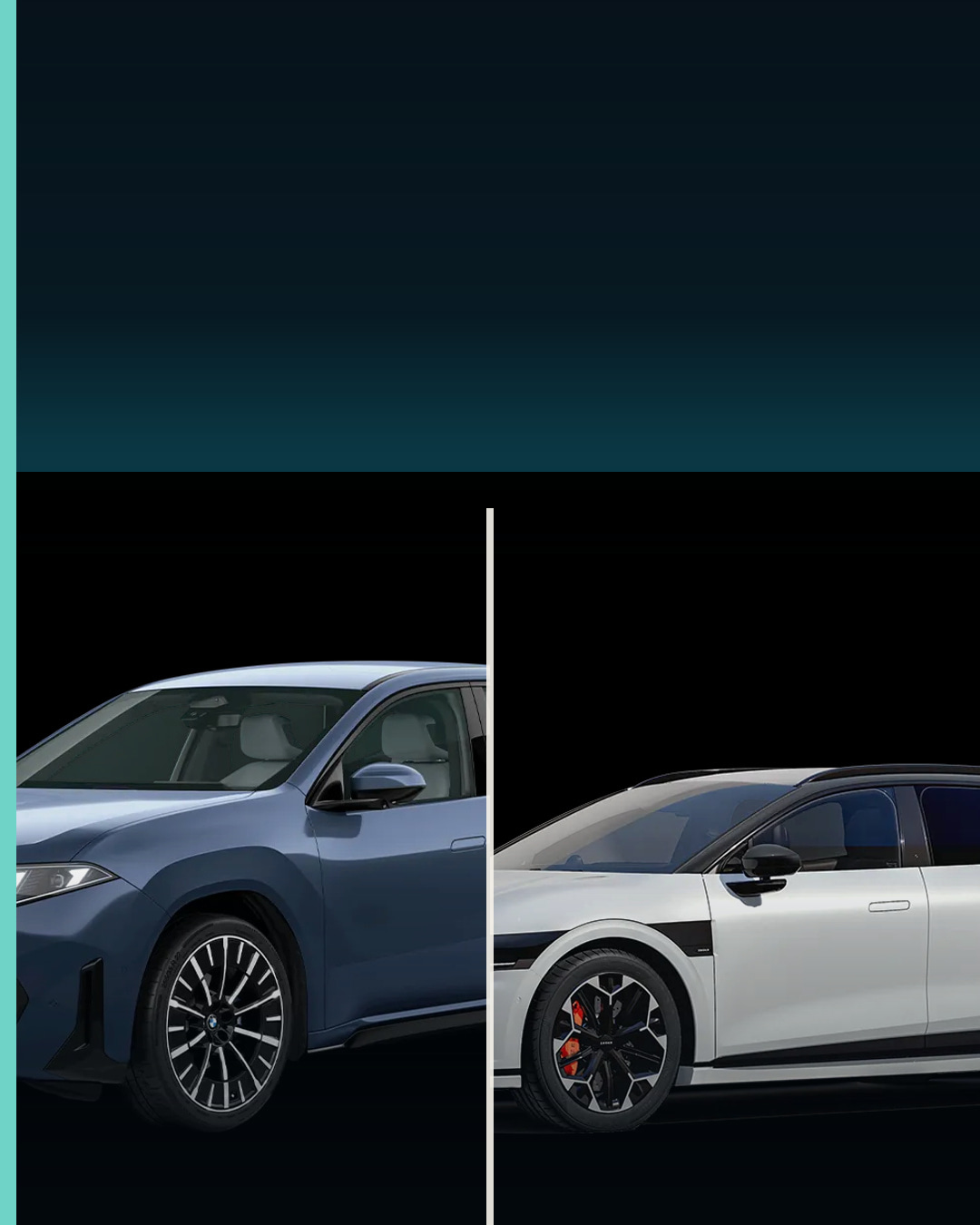
Official Euro NCAP, BMW, and ZEEKR media in a BTI editorial comparison. No endorsement or BTI road test is implied.
New car tech, plain English
BMW iX3 vs ZEEKR 7GT Controls: Why 100% vs 20%
Both cars earned five stars overall. Their control paths tell a much more surprising story.
The BMW iX3 vs ZEEKR 7GT controls comparison explains why car buttons are back in the news. Euro NCAP published 2026 results for both vehicles on July 8. Each earned five stars overall. But the BMW received 100% for driving controls and 60% for comfort and infotainment controls. The ZEEKR received 20% in both control rows.
Those numbers do not make the BMW five times safer. They do not mean the ZEEKR lacks buttons. They mean Euro NCAP tested specific control tasks and found very different paths through the two cockpits.
The distinction matters to buyers because a clean dashboard can still hide frequent actions inside a screen. A car can also have several real buttons and still route other assessed tasks through menus. The useful question is not “buttons or screens?” It is “which important action can I reach directly while driving?”
Want the quick version next time?
Follow @besttechinsight for fast, source-backed explanations of new products, chips, AI, robots, EVs, and science. The detailed guide stays here on BTI.
BMW iX3 vs ZEEKR 7GT controls: the quick answer
Euro NCAP changed its rating system in 2026. The Safe Driving stage now examines the placement, clarity, and ease of use of essential controls. Its lab procedure records whether each task uses a direct physical input, direct voice input, always-available touch control, a touch menu with no more than two steps, or a deeper menu.
For the tested BMW iX3 50 xDrive, Euro NCAP says key driving controls use buttons or stalks, while infotainment and comfort rely more on the screen or speech. For the tested ZEEKR 7GT Privilege AWD, Euro NCAP says many key driving controls, infotainment functions, and comfort functions rely on the center screen.
The result is the 100-versus-20 control contrast. Yet the ZEEKR scored higher in the complete Safe Driving stage, 79% to 73%, because that stage also includes occupant monitoring, driver monitoring, speed assistance, and other vehicle-assistance results. One subscore never tells the whole safety story.
The official score comparison
| Euro NCAP measure | BMW iX3 | ZEEKR 7GT | What it means |
|---|---|---|---|
| Overall Euro NCAP rating | 5 stars | 5 stars | The overall result combines Safe Driving, Crash Avoidance, Crash Protection, and Post-Crash Safety. |
| Safe Driving stage | 73% | 79% | This whole stage includes occupant monitoring, driver engagement, and vehicle assistance, not controls alone. |
| Driving controls subscore | 100% | 20% | Euro NCAP found a much stronger direct-control path for the BMW’s assessed driving tasks. |
| Comfort and infotainment controls | 60% | 20% | Screen, speech, always-available touch, and menu depth all affect the assessed path. |
Source: Euro NCAP 2026 assessments published July 8, 2026. Tested variants were the BMW iX3 50 xDrive, left-hand drive, and ZEEKR 7GT Privilege AWD, left-hand drive. Scores are assessment results for those tested vehicles, not BTI ratings.
What Euro NCAP changed in 2026
Older safety conversations often focused on crash structure and automatic braking. Those still matter. The 2026 system adds a clearer look at what happens before a crash, including how a driver finds and uses controls.
The General Vehicle Controls procedure gives the lab a common vocabulary. A task can use a direct physical control, direct voice, direct touch that stays available, a touch menu reached in two steps or fewer, or a deeper menu. The procedure says a menu path deeper than two steps is not acceptable for the defined functions.
This is more precise than saying every screen is bad. A large screen can present navigation and media clearly. An always-visible touch target may be easier than a buried menu. Speech can help with some tasks. The assessment asks how the action is reached, not whether a dashboard has any screen at all.
Why the BMW iX3 control score reached 100%
Euro NCAP’s public assessment says key driving controls in the iX3 use physical controls such as buttons or stalks. That maps well to direct actions a driver can find by position and touch. The same assessment says infotainment and comfort controls depend more on the screen or speech, which helps explain why that separate row was 60% rather than 100%.
BMW’s own cockpit media shows that the vehicle is still highly digital. The point is not that the iX3 rejected screens. It is that its assessed driving-control paths remained direct enough to earn the full driving-controls subscore.
This is also why a single photo cannot settle the question. A steering wheel may look simple, but the test follows individual actions. Buyers should do the same during a showroom visit or test drive.
Why the ZEEKR 7GT can have buttons and still score 20%
ZEEKR’s product page says the 7GT has physical buttons on the three-spoke steering wheel and center console. Its cockpit image shows them. Euro NCAP still says many key driving controls, along with infotainment and comfort functions, rely on the center screen.
Those statements can both be true. Having some buttons is not the same as giving every assessed task a direct control. Euro NCAP follows the path for each defined action. If important tasks depend on the screen or menu depth, the vehicle can lose control points even when visible buttons remain elsewhere.
The ZEEKR result also proves why the full rating needs context. Its driving-control and comfort-control rows were low, but strong results in other parts of Safe Driving, Crash Avoidance, Crash Protection, and Post-Crash Safety still produced five stars overall.
A five-minute control check before you buy
| Try this action | What to notice | Better buyer question |
|---|---|---|
| Hazard lights | Can you reach the control immediately without searching? | Would another driver find it in one glance? |
| Wipers and lights | Is the main action on a stalk, button, always-visible control, or menu? | Can you use it while keeping your eyes up? |
| Front and rear defogging | Count taps and note whether the path changes with the current screen. | Can you clear the glass quickly in bad weather? |
| Cabin temperature | Check whether the main target stays visible and responds predictably. | Can a passenger understand it without a tutorial? |
| Audio volume | Try the driver and passenger positions. | Is there a direct control when the screen is showing something else? |
This is a usability check, not a substitute for a safety assessment. It helps a buyer notice the daily control path before novelty, animation, or a short demonstration makes the cockpit feel easier than it is.
Why physical controls are returning without replacing screens
Volkswagen’s new ID. Polo cockpit is a clear example of the mixed approach. The company describes separate climate and hazard buttons, button fields on the steering wheel, and a rotary audio controller. It also keeps a large infotainment touchscreen.
That is the direction this evidence supports: screens for maps, media, configuration, and changing information; direct controls for frequent or time-sensitive actions. The exact balance will vary by car, and a physical control can still be badly placed or poorly labeled.
So the simple headline “buttons are back” needs one extra line. The useful comeback is not more buttons everywhere. It is direct access where delay and distraction matter.
How BTI checked the control-score claims
BTI reviewed Euro NCAP’s 2026 protocol announcement, the General Vehicle Controls Test Procedure, and the official BMW iX3 and ZEEKR 7GT assessment pages on July 15, 2026. We separated each vehicle’s overall star rating, full Safe Driving stage, driving-controls subscore, and comfort-and-infotainment subscore.
We also checked manufacturer cockpit sources from BMW and ZEEKR, plus Volkswagen’s ID. Polo cockpit release. Manufacturer images show the real products, but the control-score claims come from Euro NCAP. BTI did not drive, inspect, buy, benchmark, rate, or independently test either vehicle.
The topic was selected after a bounded public competitor sample found a July 14 physical-buttons post from The Tech Informer at 1,017 visible likes plus comments, 1.764 times that account’s sampled median. That public count is only directional packaging evidence. It does not show reach, retention, saves, shares, follows, watch time, cause, or proof that the post went viral. BTI used a new product-specific comparison, original copy, and official source media rather than copying the post.
This article has no affiliate link. BTI has no verified BMW, ZEEKR, Volkswagen, or Euro NCAP affiliate relationship for this explainer. We do not state current price, stock, delivery timing, reliability, or a BTI review score.
What this comparison does not establish
- An overall safety hierarchy between the two vehicles. Both earned five stars, and the ZEEKR had the higher complete Safe Driving percentage.
- That every BMW iX3 or ZEEKR 7GT variant, market, software version, or future update has the identical control path.
- That physical controls are automatically well placed, intuitive, durable, or preferable for every task.
- That touchscreens, speech, or digital interfaces are unsafe by themselves.
- Any BTI hands-on finding, owner review, reliability result, price, availability, award, endorsement, or investment conclusion.
What to remember
Both vehicles earned five stars. The surprise sits one level down. Euro NCAP gave the BMW iX3 100% for driving controls and the ZEEKR 7GT 20%. That gap describes specific control paths, not the whole car.
The best buyer move is simple: before choosing a car, try the frequent and urgent actions yourself. Count the steps. Notice whether the control stays available. Ask whether you can find it without looking away for long.
Follow @besttechinsight for the exact product, score, chip, robot, and science result decoded in plain English. Related BTI explainers cover the iOS 27 beta install decision, how 1X NEO senses a slipping object, and how MIT’s FAAV moves from water into air.
BMW iX3 vs ZEEKR 7GT controls FAQ
Did both the BMW iX3 and ZEEKR 7GT earn five Euro NCAP stars?
Yes. Euro NCAP’s July 8, 2026 assessments gave both tested vehicles five stars overall.
Why did the BMW iX3 score 100% for driving controls?
Euro NCAP says key driving controls use physical controls such as buttons or stalks. That helped the tested iX3 earn the full driving-controls subscore.
Why did the ZEEKR 7GT score 20% if it has physical buttons?
ZEEKR shows physical buttons on the steering wheel and console, but Euro NCAP says many assessed driving, infotainment, and comfort functions rely on the center screen. The test follows each task, not the total number of visible buttons.
Can 100% versus 20% be read as a five-times safety gap?
No. Those numbers are control subscores. The complete rating includes four safety stages, and the ZEEKR had the higher full Safe Driving percentage.
Are touchscreens banned by Euro NCAP?
No. The procedure recognizes direct touch and short menu paths. It evaluates how a defined function is reached; it does not ban screens.
Sources
- Euro NCAP: 2026 protocol changes: Primary explanation of the new four-stage rating and the controls assessment.
- Euro NCAP SD 203: General Vehicle Controls Test Procedure: Primary test procedure for physical, voice, direct-touch, and menu-based control paths.
- Euro NCAP 2026 BMW iX3 assessment: Official rating, tested variant, control description, and score breakdown.
- Euro NCAP 2026 ZEEKR 7GT assessment: Official rating, tested variant, control description, and score breakdown.
- BMW Group official BMW iX3 cockpit media: Manufacturer press source for the BMW cockpit visual.
- ZEEKR official 7GT product page: Manufacturer description and cockpit image, including physical steering-wheel and console buttons.
- Volkswagen official ID. Polo cockpit release: Manufacturer example of the wider return to direct climate, hazard, steering-wheel, and audio controls.