
Photonic chip explainer
Light-Powered Chip Explained: How Monash Moves Data With Light
The simple version: Monash researchers made one tiny chip create, steer, and read information carried by light.
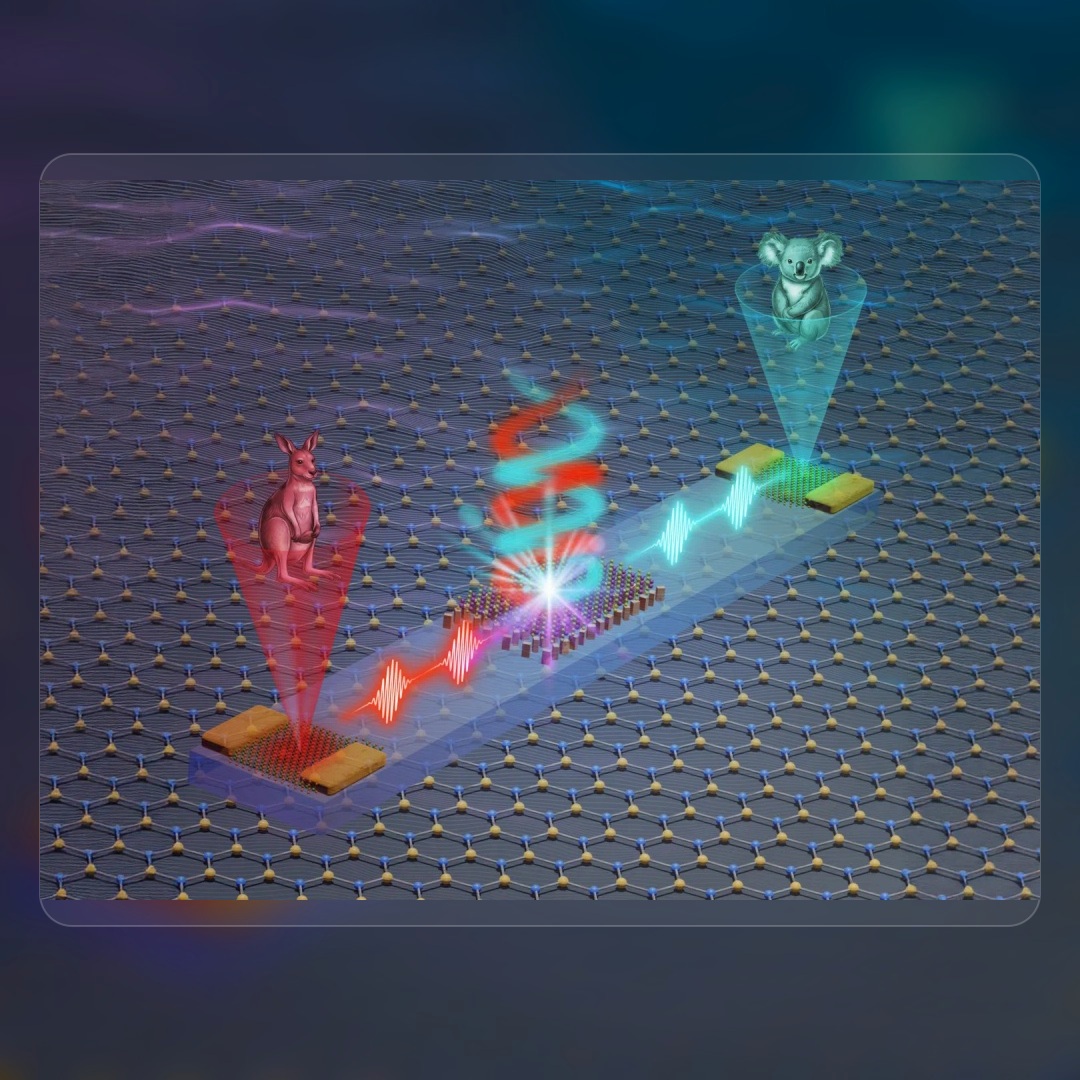
A light-powered chip sounds like science fiction, but the useful idea is straightforward. Most everyday computers move information through electrical signals. Monash University researchers described a nanoscale circuit that can generate, guide, and read information carried by light inside a compact chip-based device.
That does not mean a consumer laptop with this exact chip is ready to buy. BTI did not test the chip, verify commercial readiness, review a product, or make performance, price, stock, investment, or availability claims. This is a plain-English explainer for a current research story that is already spreading through tech and science feeds.
The reason it is interesting for normal readers is the map: electricity usually carries information inside chips, light can carry information in optical systems, and future computing may need smaller ways to connect those worlds. Monash’s work matters because the same device handles three jobs that are easier to understand when you say them out loud: create the signal, steer the signal, and read the signal.
- The post-worthy idea is not “quantum buzzword.” It is one chip doing create, steer, and read for light-based information.
- The word “valley” works like an extra material-state label that can help encode information.
- Room-temperature operation matters because many quantum systems are harder to use when they need extreme cooling.
BTI on InstagramNew tech, decoded in plain EnglishFollow @besttechinsight for quick breakdowns of products, chips, robots, EVs, and science. Full reviews and guides stay here on BTI.
Light-powered chip quick answer
A light-powered chip uses controlled light behavior to carry or process information. In this Monash research, the chip is described as a fully integrated nanoscale circuit that can make special light signals, guide them with precision, and convert the result into electrical output. That is why the story is stronger than a vague “future chip” headline.
The most beginner-friendly way to picture it is a tiny handoff. Electrical systems are still everywhere. Light-based systems can move information differently. The hard part is making a small, useful device where the light signal is created, steered, and read without needing a messy collection of separate parts.
| Part | Plain-English role | Normal example |
|---|---|---|
| Electric chips | The familiar baseline: information usually moves through electrical signals. | Your phone, laptop, router, and game console all depend on electrical circuits, even when they also use light in networks or displays. |
| Light signals | Photons can carry information in a way that may fit future optical and quantum systems. | Instead of only pushing electrons through wires, a photonic circuit uses controlled light behavior to move information. |
| Create | The chip can generate the special light signal inside the device. | That matters because separate generate-and-detect setups are harder to shrink into practical chip systems. |
| Steer | The chip can guide the light signal in precise directions. | A useful chip needs controlled movement, not just a bright flash or a one-off lab signal. |
| Read | The chip can convert the information back into an electrical signal. | Reading the result is how the rest of a computing system can use what happened in the light-based part. |
Why light instead of only electricity?
Electricity is not going away. The point is that light can be useful for information movement, optical communication, advanced imaging, and some quantum technology research. You already see this broad idea in fiber internet, data-center optics, camera systems, and laser-based tools. Monash’s chip belongs to that larger shift toward photonic devices: chips that use light as a working part of the system.
The phrase “light instead of electricity” can be misleading if it sounds like every normal computer chip gets replaced tomorrow. A safer translation is: researchers are building smaller ways for light-based information to be created, controlled, and connected to electrical systems. The chip is a research step toward that future, not a consumer upgrade checklist.
This is also why the Instagram version should open with a real object, not abstract jargon. “This chip uses light to move information” gives the audience a clear reason to swipe. Then the slides can explain what light carries, what the chip does, what “valley” means, and what not to overclaim.
What “valley” means in plain English
The technical story uses the phrase “valley degree of freedom.” For a beginner, think of it as an extra label tied to how information can be encoded in certain materials. The label is not a sticker sitting on the chip; it is a property researchers can use when light interacts with specially designed material structures.
Why does that matter? Computing systems need reliable ways to represent information. A normal bit can be simplified as a state. Future optical or quantum systems may use more specialized states. Valley-based light signals are one candidate research area, and Monash’s contribution is putting more of the generate, steer, and read sequence into one integrated chip.
The safest BTI take is practical: do not ask a normal reader to memorize valleytronics. Show them the handoff. The chip creates a light-based signal, steers it through a tiny structure, and reads it back into electrical output. That is the whole carousel in one sentence.
What not to overclaim
This is not a laptop-buying guide, a phone-chip leak, or a confirmed product launch. The research may eventually help quantum computing, optical communication, advanced imaging, or lower-energy computing systems, but those outcomes still need engineering, scaling, manufacturing, integration, software, cost, and reliability work.
That caveat is part of the content strategy. The strongest version of this post is interesting without pretending the future already arrived. It should say: “Here is what the chip does, here is why that is unusual, and here is the line between lab progress and a product you can buy.”
Light-powered chip FAQ
Does this chip replace normal computer chips?
No. The public source describes research progress in an integrated photonic and valleytronic chip. It should not be treated as a finished consumer replacement for today’s processors.
What does the chip do in simple words?
It creates special light signals, steers them through a tiny device, and reads the result back into an electrical signal.
Why does room temperature matter?
Room-temperature operation can make research systems more practical than systems that require extreme cooling. It does not automatically mean the device is ready for mass-market products.
Why is this useful for AI or quantum technology?
AI, optical communication, imaging, and quantum systems all care about how information is represented and moved. A smaller integrated chip for light-based information could become one building block if the research matures.
Sources for this light-powered chip guide
This guide uses public Monash and research-source material. It does not include fabricated testing, pricing, ratings, availability, reviews, awards, endorsements, or investment claims.
- Monash University source story: Monash describes the May 2026 nanoscale circuit, its light-signal create/steer/read functions, room-temperature operation, and research caveats.
- ScienceDaily summary sourced from Monash University: ScienceDaily summarizes the same research for a general science audience and frames the work as a step toward photonic AI and quantum technologies.
- Nature Photonics DOI: The DOI points to the peer-reviewed research record for readers who want the technical source.
BTI final take
The cleanest way to understand the Monash light-powered chip is the three-step map: create the light signal, steer the light signal, read the result. That is more memorable than the jargon and more honest than pretending the research is already a product.
Save the simple version: normal chips mostly use electrical signals, this research works with information carried by light, and the important advance is putting more of the light-signal workflow on one small device.