
Robotics explainer
MWC Shanghai humanoid robot soccer explained: The AI Stress Test
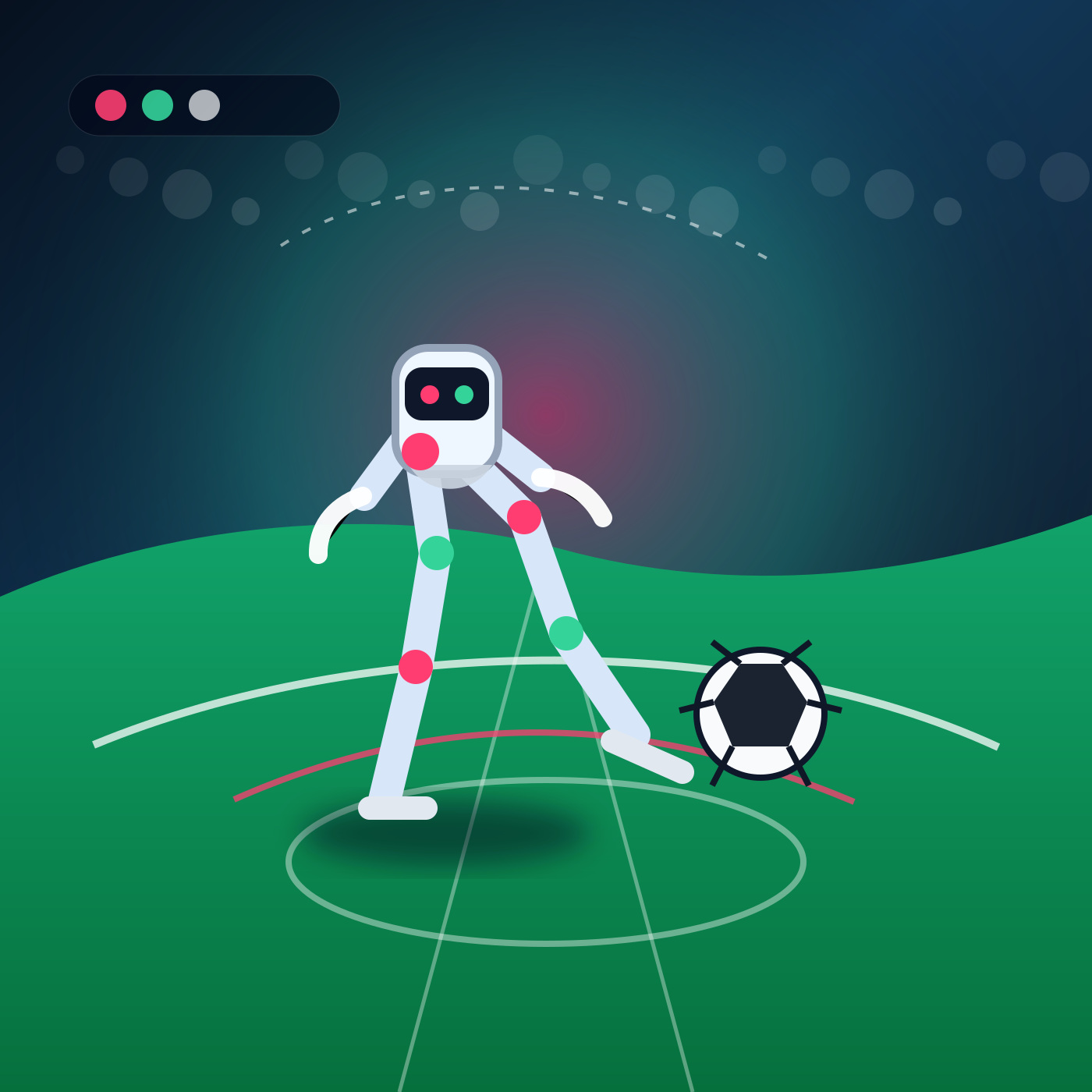
A penalty kick is simple for a person. For a humanoid robot, it is a compact test of seeing, balancing, deciding, and moving.
MWC Shanghai humanoid robot soccer is a better BTI topic than another generic AI post because it gives readers a clear scene: humanoid robots taking penalty kicks during MWC26 Shanghai. The visual is easy to understand, but the technology underneath is not.
GSMA source pages say MWC26 Shanghai runs from June 24 to June 26, 2026 at the Shanghai New International Expo Centre, with AI, robotics, drones, mobile AI, and intelligent infrastructure across the agenda. The Humanoid Robot Football Penalties Challenge ran across June 24 and 25 as a live show-floor competition.
BTI did not attend the event, test any robot, verify a winner, inspect hardware, measure performance, or confirm a commercial product. This guide explains what public GSMA and conference coverage says the demo is meant to show, then translates that into plain English for normal readers.
- A robot penalty kick is not really about sports. It is a visible test of embodied AI.
- The core systems are perception, balance, motion control, autonomy, and connectivity.
- The smart reader question is not “was the clip cool?” It is “what did the robot prove after the highlight moment?”
MWC Shanghai humanoid robot soccer quick answer
Humanoid robot soccer matters because it makes a hard AI problem visible. A chatbot can answer with words. A robot has to sense a real scene, keep balance, choose an action, move motors, and recover if reality does not match the plan. That is why a penalty kick can teach more than a vague phrase such as “embodied AI.”
The beginner version is simple: if the robot cannot see the ball, stand up, decide when to kick, and recover after contact, it is not ready for much harder physical work. The soccer field turns those hidden engineering problems into something a viewer can follow in a few seconds.
| System | Plain meaning | What to watch |
|---|---|---|
| Perception | The robot has to turn camera and sensor input into a usable idea of where the ball, goal, floor, and opponent are. | Does the robot pause, search, correct itself, or kick at the wrong moment? |
| Balance | A humanoid robot has to shift weight without falling while it walks, turns, plants one foot, and swings the other. | A slow kick can still be impressive if the robot stays upright and recovers cleanly. |
| Motion control | Software has to coordinate motors and joints so the kick is not just movement, but useful movement. | Look for smooth steps, controlled stops, and whether the kick sends the ball where the robot appears to intend. |
| Autonomy | The useful version is not a person steering every tiny action. The robot should sense, decide, and act inside the rules of the demo. | The strongest demos make the decision loop visible instead of hiding it behind a highlight cut. |
| Connectivity | MWC is a mobile event, so the bigger story is robots, edge compute, and networks working together. | Ask whether the demo explains what happens on the robot, what happens nearby, and what needs a network. |
Why a penalty kick is hard for a robot
For a person, walking to a ball and kicking it is ordinary. For a humanoid robot, the same action compresses several robotics problems into one public demo. The robot needs a working estimate of the floor, the ball, the goal, its own body position, and the timing of the kick. Then it has to move without tipping over.
That is why the MWC hook is stronger than another “AI is everywhere” headline. The soccer moment lets BTI explain the body part of artificial intelligence. Intelligence is not only a model producing an answer. In a robot, intelligence has to pass through sensors, motors, joints, power, safety rules, and the physical world.
In social terms, that gives every slide a job. Start with the kick. Then reveal the hidden work: see, balance, decide, move, recover. Each swipe answers the next obvious question instead of throwing jargon at the reader.
The four moments worth watching
Most viewers will remember the funniest or smoothest clip. BTI should train readers to watch the boring details because the boring details reveal the engineering. A robot that walks slowly but recovers cleanly may be more meaningful than a fast clip that hides setup, repeated attempts, or remote assistance.
| Demo moment | Beginner question | Why it matters |
|---|---|---|
| The robot walks toward the ball | Can it find the target and keep its feet under it? | Real robots need vision and balance before they can do any useful physical work. |
| The robot plants one foot | Can it control weight shift before the kick? | A humanoid kick is a compact test of motors, joints, timing, and stability. |
| The robot chooses the kick | Is the move autonomous or mostly remote-controlled? | Autonomy is the difference between a remote performance and a system that can react. |
| The robot recovers after the kick | What happens after the impressive second? | Recovery is where a show-floor clip starts to become a practical robotics lesson. |
Why networks are part of the story
MWC is not mainly a robot show. It is a mobile and connectivity event. That is why the same demo sits inside a bigger conversation about mobile AI, edge compute, 5G-Advanced, future networks, and connected intelligence.
The practical question is where the robot’s “thinking” happens. Some decisions may need to happen on the robot because balance and safety cannot wait. Other tasks may use nearby computers, cloud systems, or networked coordination. The GSMA framing around networked capabilities is useful because future robots will not be judged only by the shape of the machine. They will also be judged by the compute and connectivity system behind it.
For a beginner, this is the cleanest way to explain the conference angle: the robot is the visible part. Sensors, chips, software, nearby compute, and networks are the hidden support system.
How to avoid overclaiming the demo
A show-floor challenge is not proof that home humanoid robots are ready. It is also not a product review, a price guide, or a buying recommendation. A controlled penalty field is much easier than a cluttered kitchen, a factory floor with people nearby, a warehouse shift, or a hospital hallway.
That does not make the demo meaningless. It makes the demo a starting point. The right takeaway is that embodied AI has to prove more than “the model is smart.” It must prove that the complete system can sense, move, react, and fail safely in the place where it is supposed to work.
BTI should keep that balance in every social caption and article paragraph. Use the current MWC hook, show the robot-soccer scene, then explain the systems. Do not claim confirmed product performance, retail availability, rankings, awards, endorsements, or hands-on testing.
Sources for this MWC Shanghai robot soccer guide
This guide uses public GSMA, MWC Shanghai, PR Newswire, and conference-guide sources. It avoids fabricated testing, prices, ratings, reviews, awards, availability, endorsements, investment claims, attendance claims, or product recommendations.
- GSMA announcement for the Humanoid Robot Football Penalties Challenge: Explains that the challenge debuts at MWC26 Shanghai and frames it around embodied intelligence, mobile AI, and intelligent infrastructure.
- GSMA MWC26 Shanghai opening agenda: Confirms the event opened on June 24, 2026 and lists the robot football challenge among new show-floor features.
- GSMA press release distributed by PR Newswire: Describes the penalty football games, June 24-25 timing, and the systems being showcased: motion control, perception, autonomy, and networked capabilities.
- MWC Shanghai official site: Provides the event context, including AI, robotics, drones, 6G, and embodied AI themes.
- TechRadar June 2026 conference guide: Lists MWC Shanghai as a June 24-26 event and highlights mobile AI, satellite links, smart mobility, and the humanoid penalty shootout.
MWC Shanghai humanoid robot soccer FAQ
What is the MWC Shanghai humanoid robot football challenge?
It is a GSMA-announced show-floor robotics competition at MWC26 Shanghai where humanoid robots take part in penalty football games. Public GSMA material frames it as a showcase for embodied AI, motion control, perception, autonomy, and networked capabilities.
Why is robot soccer useful for explaining AI?
Robot soccer gives viewers a simple scene while exposing hard engineering problems. The robot has to see the ball, balance, move joints, choose a kick, and recover after action.
Does this mean humanoid robots are ready for homes?
No. A show-floor penalty challenge is a controlled demo. Homes, factories, roads, hospitals, and warehouses all have different safety and reliability demands. This article does not make a consumer buying recommendation.
What should viewers watch besides the kick?
Watch how the robot approaches the ball, whether it stays balanced, whether the decision looks autonomous, and what happens immediately after the kick. Recovery often teaches more than the highlight moment.
BTI final take
The useful story is not “robots can play soccer.” The useful story is that a simple penalty kick makes embodied AI visible. It shows the gap between screen AI, which answers, and physical AI, which has to act in the real world.
That is exactly the kind of current tech story BTI should translate: one weird public moment, one simple mental model, and enough source-backed context to help a normal reader understand why it matters.
Follow BTI for the next plain-English tech breakdown
BTI turns current tech stories into simple buyer and science explainers without claiming hands-on testing, prices, ratings, or availability.