
Space tech explainer
SpaceX Starfall reentry capsule explained: Bringing Space Stuff Home
Rockets send things up. Starfall is about bringing things back.
The SpaceX Starfall reentry capsule is the kind of topic BTI should cover because it looks mysterious at first, but the beginner version is simple. SpaceX launched a demonstration mission called Starfall on June 23, 2026. Public reports describe Starfall as an uncrewed return capsule for bringing payloads back from space.
That sounds small until you ask one normal-person question: if companies want to make or test things in space, how do those things come home? Satellites usually stay in orbit. Rockets get payloads up. Starfall is about the other direction.
BTI did not test Starfall, inspect SpaceX hardware, verify mission telemetry, confirm a return or splashdown, or make any financial-market claim. This guide translates public source material from SpaceX, the FAA, launch trackers, and space reporting into plain English so readers understand why the launch matters.
- Starfall is best understood as a way to bring space experiments and materials back down.
- It is not a passenger spacecraft, a laptop chip, financial guidance, or a consumer product.
- The interesting idea is not just the launch. It is the possibility of repeatable space-to-Earth logistics.
SpaceX Starfall reentry capsule quick answer
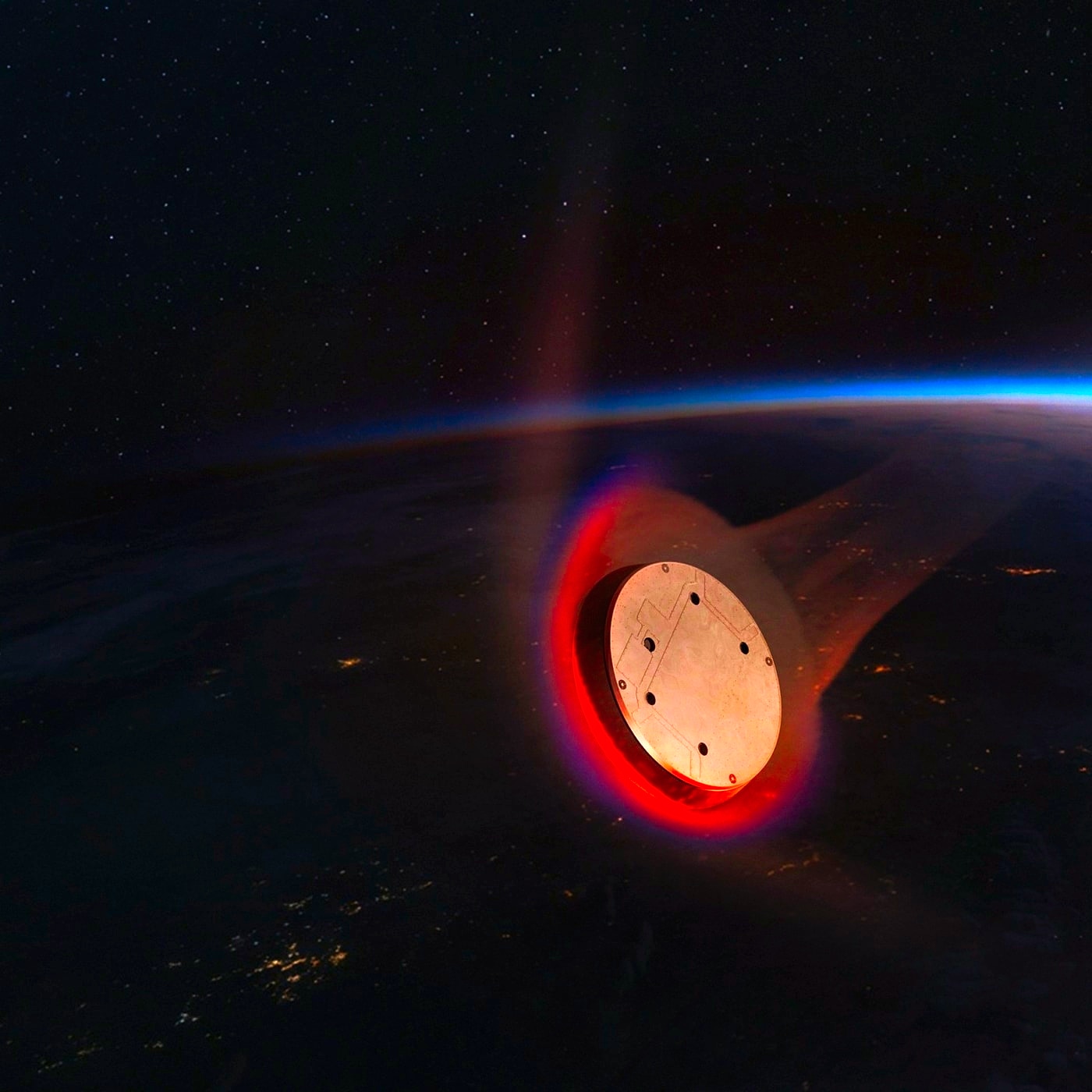
SpaceX Starfall is a compact uncrewed reentry capsule. Public FAA-sourced descriptions say it is designed to carry payloads, spend time in space, survive reentry, deploy parachutes, and be recovered after landing in the ocean. SpaceX has kept many mission details limited, so the safest framing is: Starfall is a demo of a return-capsule system, not a fully explained public product line.
The plain-English hook is strong: space is not only about going up anymore. If space manufacturing becomes real, companies need a way to bring the finished item back. That is why a flat-looking capsule can be more important than it looks.
| Part | Plain meaning | Why it matters |
|---|---|---|
| The ride up | Starfall rode to orbit on a Falcon 9 during the June 23, 2026 Starfall Demo mission. | The rocket gets the return capsule into space, but the capsule is the actual new story. |
| The return capsule | Starfall is a small uncrewed spacecraft built around bringing experiments, materials, or cargo back down. | Most people think of space as a one-way trip. Starfall is about the way back. |
| Microgravity time | The point is to give science and manufacturing work time in low gravity and vacuum before returning it. | A space factory only matters if you can get the finished material back to Earth. |
| Reentry hardware | Public FAA-sourced reports describe a top plate, heat shield, attitude control, and parachutes. | Reentry is the hard part because the capsule has to survive heat, orientation, and recovery. |
| The unanswered part | SpaceX has not publicly shared every mission detail, and public reports should avoid filling gaps with guesses. | This is where BTI can be useful: explain what is known, then clearly label what is not confirmed. |
Why everyone suddenly cared about Starfall
SpaceX launches Falcon 9 rockets often enough that a normal launch can feel routine. Starfall was different because the payload was new, quiet, and strange-looking. Spaceflight Now reported that SpaceX did not show upper-stage or payload views during the broadcast and that the company had not disclosed every mission-profile detail.
That mystery is part of why the topic fits social media. But the best BTI version should not lean on vague hype. It should make the core idea understandable: Starfall is a return capsule. Return capsules matter when the product of the mission is not a satellite that stays in space, but something you want back on Earth.
Think medicine research, advanced materials, manufacturing experiments, and urgent cargo concepts. Those are not consumer shopping claims. They are examples of the kind of work that public FAA and space-reporting sources connect to microgravity access and return services.
Starfall vs Dragon vs Starlink
The easiest way to keep this topic from feeling random is to separate three SpaceX names that sound similar but play different roles.
| Name | Simple version | Do not confuse it with |
|---|---|---|
| Starlink | A satellite network. Starlink launches are about putting communication satellites into orbit. | Starfall is not a batch of internet satellites. It is a return-capsule concept. |
| Dragon | A larger SpaceX spacecraft with cargo and crew heritage that can return from missions such as ISS flights. | Starfall is reported as uncrewed and much smaller; it should not be framed as a passenger spacecraft. |
| Starfall | A compact uncrewed reentry capsule meant to bring payloads back from space. | It is not a consumer gadget, not financial guidance, and not a confirmed mass-market service. |
What the FAA documents add
The FAA’s NEPA page lists the final environmental assessment for SpaceX Starfall reentry vehicle operations in the Pacific Ocean. That matters because Starfall is not only a launch story. Reentry, splashdown, recovery zones, and environmental review are part of the system.
Public reports drawing on the FAA material describe Starfall as a disk-like vehicle about 2.5 feet tall and about 10.2 feet wide, with capacity for about 2,200 pounds of payload. Those figures are useful for scale, but they should not be turned into a product spec sheet for buyers. The reader takeaway is simpler: Starfall is smaller than Dragon and shaped around unmanned payload return.
That also explains why the post should avoid “moonshot” language. The more grounded angle is better: SpaceX may be building a repeatable return service for things made, tested, or moved through space.
Why space factories need a return trip
A factory in space is only useful if the result has a path back to Earth. A material, lab sample, crystal, drug-research payload, or prototype does not help much if it remains unreachable. Starfall points at that less flashy but critical problem.
Here is the beginner version: launch vehicles are the trucks going uphill. Return capsules are the trucks coming back down. For decades, the most famous return vehicle was a large spacecraft such as Dragon or earlier government systems. Starfall appears to aim at a smaller, more repeatable kind of return.
That is why the topic is more interesting than “SpaceX launched something secret.” The useful story is the business and science logic underneath: reusable space operations need both directions.
How to talk about the launch without overclaiming
Use confirmed wording. Spaceflight Now reported Falcon 9 liftoff from Space Launch Complex 40 on June 23, 2026 and deployment confirmation later that morning. Next Spaceflight lists the mission as a launch success. Those facts are enough for an explainer.
Do not claim that BTI knows the full payload, customer list, mission duration, return timing, or recovery result unless an official or reputable source confirms it. Do not turn a space technology story into financial guidance. Do not imply SpaceX endorsed BTI. Do not add a price, rating, review, award, availability, or hands-on testing claim.
This restraint makes the content better. A clear explainer ages well because it helps the reader understand the system instead of chasing one uncertain detail.
Follow BTI for the next plain-English tech breakdown
If this Starfall guide helped, follow @besttechinsight on Instagram for the next current tech story explained without hype. BTI focuses on one clear question at a time: what happened, why normal readers should care, and what not to overclaim yet.
Sources for this Starfall guide
This guide uses public mission, regulatory, launch-tracking, and space-reporting sources. It avoids fabricated testing, prices, ratings, reviews, awards, availability, endorsements, investment claims, or unconfirmed return claims.
- SpaceX Starfall Demo mission page: The official mission page for the Starfall Demo launch.
- Spaceflight Now launch report: Reports the June 23, 2026 liftoff, deployment confirmation, booster context, and SpaceX’s limited public payload details.
- FAA NEPA documents page: Lists the final environmental assessment for SpaceX Starfall reentry vehicle operations in the Pacific Ocean.
- Space.com Starfall explainer: Summarizes public FAA-sourced capsule dimensions, payload capacity, and uncrewed return-capsule details.
- Next Spaceflight Starfall Demo tracker: Tracks the launch status, liftoff time, launch vehicle, site, and payload summary.
- Payload Space reentry market analysis: Adds industry context for why return capsules matter to in-space manufacturing.
SpaceX Starfall FAQ
What is SpaceX Starfall?
Starfall is a SpaceX uncrewed reentry capsule concept described in public reports as a way to bring payloads back from space. The simple version is that it is about the return trip, not just the launch.
Is Starfall the same as Dragon?
No. Dragon is a larger SpaceX spacecraft with cargo and crew heritage. Public reports describe Starfall as smaller, uncrewed, and focused on payload return rather than carrying astronauts.
Did Starfall return to Earth yet?
This BTI guide does not claim a completed return or splashdown. It only relies on public launch, deployment, FAA, and capsule-description sources available while this article was prepared.
Why does Starfall matter for normal people?
It helps explain a future-facing idea in simple terms: space businesses need a practical way to send experiments or materials up, let them spend time in microgravity, and bring them home.
BTI final take
The best Starfall story is not “SpaceX launched a mystery object.” It is “space factories need a delivery route back to Earth.” That is clearer, more useful, and more likely to make readers swipe because each slide answers the next obvious question.