
Clean shipping explained
Oceanbird Wing560 Explained: Why Tirranna Has a 150-Foot Wing
It looks like an airplane wing standing on a ship. The useful question is how a sideways wind can reduce the work demanded from the engine.
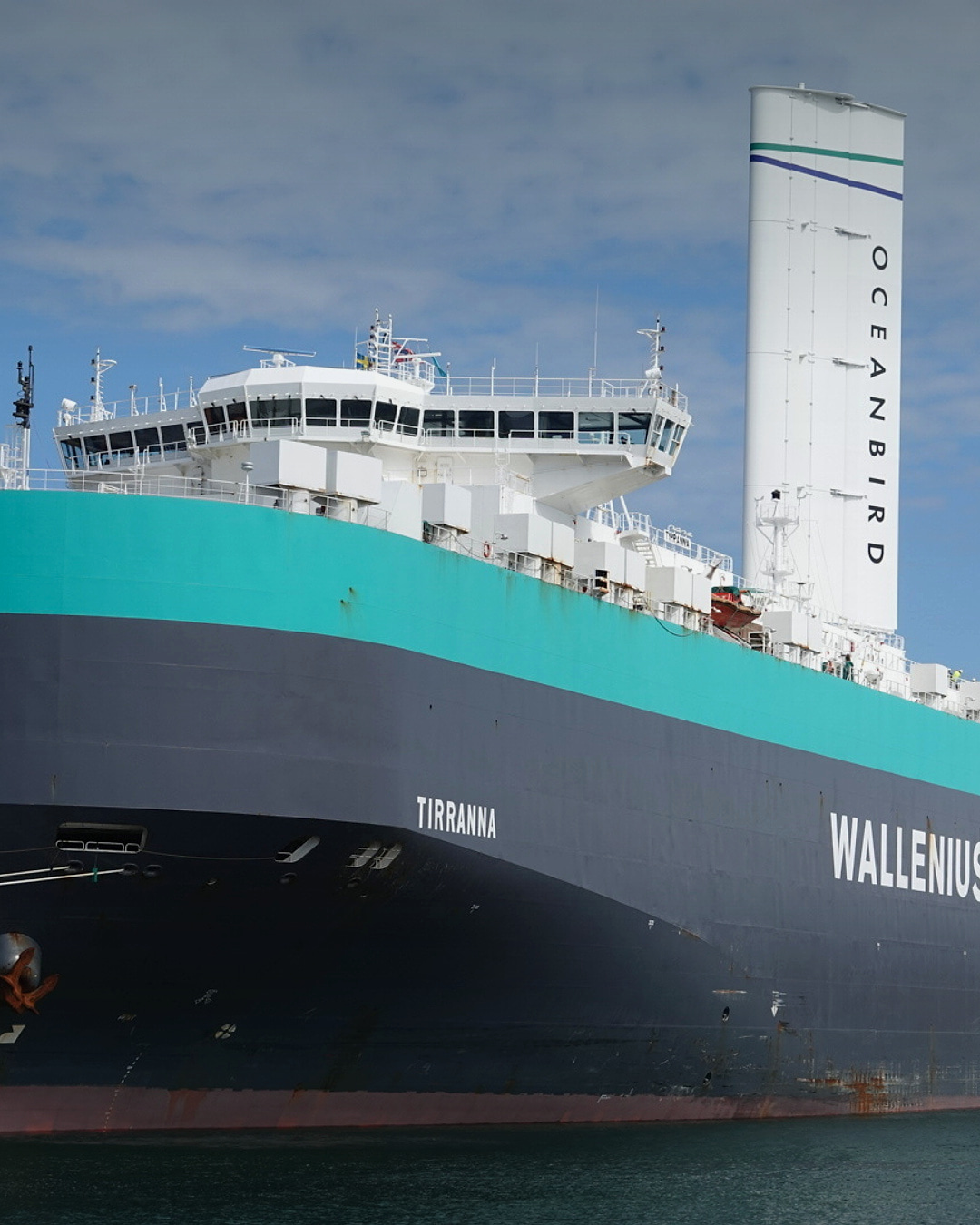
Why did a 230-meter cargo ship grow a 46-meter wing? Oceanbird Wing560 is now installed on Wallenius Wilhelmsen’s car carrier Tirranna as the system’s first onboard prototype. The rigid wing sail was installed in Rotterdam in late June, completed harbor and sea acceptance tests on July 1, 2026, and is now collecting performance data during commercial operation.
The visual is strange because modern cargo ships are usually understood as engine-powered machines. Wing560 does not turn Tirranna into a traditional sailing ship, and the current one-wing test does not remove its engine. The wing adds another source of thrust when wind direction, wind speed, route, weather, and operating conditions make that useful. Less thrust demanded from the engine can mean less fuel used, but the size of that reduction must be measured across real voyages.
This guide translates public information from Oceanbird, vessel owner Wallenius Wilhelmsen, and the European Commission’s Orcelle project record, checked July 12, 2026. BTI has not boarded Tirranna, measured wing loads, audited route data, verified fuel savings, inspected the control system, or assessed the vessel’s safety certification. Product dimensions, power figures, project targets, and test status remain attributed to their published sources.
Oceanbird Wing560 quick answer
Wing560 is a rigid, tiltable wing sail. Air moving around its main element and flap creates an aerodynamic force, much as air around an aircraft wing creates lift. The ship rotates and adjusts the wing so part of that force points along the vessel’s direction of travel. That forward component is thrust supplied by wind.
The engine still handles propulsion when wind is weak or poorly aligned, and it remains important for maneuvering and safety. When the wing supplies useful forward force, the ship can ask less of the engine or use the added force to support speed. The basic energy path is simple: wind moves past shaped surfaces, pressure differs around those surfaces, the wing transfers force into its foundation, and the hull moves forward.
Oceanbird says the installed structure stands 46 meters from foundation to top, with a 40-meter wing that is 14 meters wide. The wing and foundation weigh about 200 tonnes, though the company says weight varies by vessel and materials. This is ship-scale machinery with controls, hydraulics, alarms, data links, and backup systems.
Five facts, translated without the sales gloss
| Published fact | What it means | What not to assume |
|---|---|---|
| 46 m from foundation to top | The installed structure is about 150 feet tall; the wing section itself is 40 m tall and 14 m wide. | These are Oceanbird product dimensions, not a BTI measurement of the installed ship. |
| About 200 tonnes with foundation | A rigid wing sail is major ship machinery, not a fabric sail tied to a pole. | Oceanbird says weight can vary with vessel and material requirements. |
| 6-10 kW in normal operation | The wing mainly harvests wind; electrical and hydraulic power moves and controls it. | This is Oceanbird’s normal-operation figure, not the propulsion power delivered in every wind. |
| Around 10% target for the one-wing retrofit | The demonstrator is testing whether one wing can reduce the engine energy needed on suitable routes. | It is a project/manufacturer target, not a verified full-year Tirranna result. |
| Acceptance tests completed July 1, 2026 | The installed system cleared harbor and initial sea acceptance checks and entered commercial-operation data collection. | Passing acceptance tests does not by itself prove fuel savings, lifetime reliability, or performance in every sea state. |
Step one: shape the wind instead of catching it in cloth
A cloth sail changes shape as wind and rigging loads change. Wing560 keeps a more controlled aerodynamic profile. Oceanbird describes a main section plus a flap. The gap and angle between those surfaces create camber, or curvature, that helps the system generate useful aerodynamic force.
The easiest mental model is an airplane wing turned upright. An aircraft uses aerodynamic force primarily to oppose gravity. A ship-mounted wing is adjusted so a useful part of its aerodynamic force points forward. The force is not free of constraints: it also creates sideways and turning loads that the hull, foundation, steering, and control strategy must manage.
The wing cannot simply face every wind the same way. Apparent wind combines the natural wind with the airflow created by the moving ship. Sensors and controls must choose an angle that produces useful thrust while respecting structural, stability, weather, and navigation limits. That is why route planning and real operating data matter as much as the striking hardware.
Step two: send force through a 200-tonne machine
Oceanbird lists the wing and foundation at approximately 200 tonnes. The foundation transfers aerodynamic loads into the ship. The machinery house contains hydraulic and electrical equipment and connects with ship systems such as common alarms, power management, and data exchange.
The company describes normal operating power of roughly 6 to 10 kW per wing sail. That number is easy to misread. It is the company’s figure for operating the wing system, not a claim that 10 kW propels a 230-meter ship. Wind supplies the aerodynamic energy; onboard power positions, controls, and monitors the machinery.
Oceanbird also lists backup hydraulic lines, hoses, and a backup pump so the wing remains stowable. Redundancy matters because a tall structure cannot become immovable during changing weather, port operations, or a system fault. A prospective shipowner would need the complete failure analysis, operating envelope, inspection plan, spare-parts strategy, and crew training package, not only an efficiency estimate.
Step three: tilt the wing when height becomes a problem
Wing560 is mounted on a tilting foundation. The feature lets the structure lower from its full upright height for operational constraints and stowage. Oceanbird’s public material emphasizes that the wing should remain tiltable even in strong winds and says backup systems support that function.
Tilting is not the same as folding the wing into a small package. The photographs show a very large rigid structure sweeping through space above the deck. Port clearances, nearby equipment, cargo operations, bridge lines, weather, and personnel procedures all become part of the integration problem.
The current Tirranna installation is therefore valuable even before long-term savings are known. It turns design assumptions into real questions: Can crews operate it efficiently? How often must it be stowed? How do weather routing and schedules affect useful wind hours? What maintenance appears after repeated tilting and load cycles? How does the system behave across busy ports and open-ocean legs?
Step four: let wind reduce engine demand
The Orcelle project describes Tirranna as the one-wing retrofit demonstrator and targets about a 10% energy-efficiency gain for that configuration. Oceanbird similarly says one wing on an existing vessel can save up to about 10% of fuel and emissions on optimal routes. The phrases target, up to, and optimal routes are essential.
A rigid wing does not create the same benefit on every heading or every day. Wind availability, ship speed, route direction, weather avoidance, sea state, cargo schedule, hull condition, engine operation, and the amount of time the wing can remain deployed all affect the result. A favorable test point is not a full-year fleet average.
The July 1 harbor and sea acceptance tests establish that the installed system reached an initial operational milestone. Oceanbird says its team will sail with Tirranna for a limited period to collect performance data, monitor use, and evaluate efficiency. Until those data are reported with methods and conditions, the honest conclusion is that the target is being tested, not already proven by BTI.
Why not cover the ship in wings immediately?
The European Commission project record separates two ambitions. The one-wing retrofit targets roughly 10% efficiency improvement. A future multi-wing new-build demonstrator targets more than 50% overall. Those are different vessels and engineering problems. A ship designed around several wings can allocate deck space, structure, stability, cargo flow, controls, and route strategy differently from a retrofit.
More wings also mean more mass, foundations, maintenance, capital cost, control interactions, and deck constraints. The gain from a second wing is not automatically twice the first wing’s result. Aerodynamic interference and available wind can change as the installation grows. Public project goals are useful direction, but they are not a commercial guarantee for every ship type.
Tirranna’s role is narrower and more practical: put one full-scale system into commercial operation and learn. That makes it more informative than a rendering while still leaving major questions open. It is a demonstrator carrying real cargo, not evidence that global shipping has already switched back to wind.
How BTI evaluated the Oceanbird Wing560 story
BTI checked the current Oceanbird installation release and product page, Wallenius Wilhelmsen’s vessel-owner update, and the European Commission CORDIS record on July 12, 2026. We separated installed hardware facts from project targets, and acceptance-test completion from full-year operating proof.
We did not use the visible interaction count of a competitor post as engineering evidence. That public Instagram result informed only the packaging choice: show the surprising real machine first, ask one literal question, and explain one force chain. BTI uses its own wording, source links, rights-documented official imagery, and conservative labels.
No affiliate link appears because Wing560 is industrial equipment sold through a commercial process, not a checked retail offer for BTI readers. No Product or Review schema is used because BTI has not tested, rated, priced, or reviewed the system.
What remains unknown
- Verified Tirranna fuel and emissions savings across representative voyages.
- Performance by route, season, wind distribution, sea state, speed, and deployment time.
- Long-term reliability, maintenance hours, component replacement, and lifecycle cost.
- The complete safety case, operating envelope, stability impact, and crew procedures.
- Commercial price, financing, payback period, insurance impact, and vessel-specific installation cost.
- Whether future multi-wing systems will meet the Orcelle project target in full-year service.
What to remember
Wing560 is not a decorative sail. It is a rigid aerodynamic machine that rotates, tilts, sends force through a foundation, and works beside the engine. Its simple four-part map is wind, pressure, forward thrust, lower engine demand.
The current milestone is real: Oceanbird installed its first onboard prototype on Tirranna and completed initial acceptance tests. The savings figure remains a target under evaluation. That distinction is the difference between explaining a breakthrough and turning a promising trial into a result it has not reported yet.
For more real machines translated into plain English, follow @besttechinsight. Related BTI explainers cover a crop-weeding robot that aims lasers, wildfire satellites that look for early heat, and NASA’s eight-rotor Dragonfly spacecraft.
Oceanbird Wing560 FAQ
Is Wing560 a normal cloth sail?
No. Oceanbird describes a rigid wing sail with a main element and flap, mounted on a rotating and tilting foundation.
Does Tirranna still use its engine?
Yes. The one-wing retrofit provides wind assistance. Engines remain necessary when wind is insufficient and for maneuvering and safety.
How tall is the installed wing?
Oceanbird lists 46 meters from foundation to top, about 150 feet. The wing section itself is listed at 40 meters tall and 14 meters wide.
Has the wing already cut Tirranna’s fuel use by 10%?
No verified full-year Tirranna result is public in the sources checked. Around 10% is the stated target for the one-wing demonstrator and an up-to figure Oceanbird associates with optimal routes.
What did the July 1 sea test prove?
Oceanbird and Wallenius Wilhelmsen report that harbor and sea acceptance tests were completed. That is an installation and initial-operation milestone, not proof of lifetime reliability or savings in every condition.
Why does the wing tilt?
Tilting lets the large structure be stowed for operational constraints and safety. Oceanbird lists redundant hydraulic equipment intended to keep it stowable.
Sources
- Oceanbird Wing560 installation and sea-trial release: Primary source for the installation dates, July 1 acceptance tests, Tirranna dimensions, current data-collection phase, and Oceanbird’s stated one-wing target.
- Oceanbird Wing560 product page: Primary source for dimensions, approximate weight, materials, normal control-power use, redundancy, and integration descriptions.
- Wallenius Wilhelmsen Tirranna update: Vessel-owner source for the full-scale commercial-operation test and the distinction between learning goals and proven operating results.
- European Commission CORDIS Orcelle project: Public project record separating the one-wing retrofit target from the larger multi-wing new-build research goal.
Follow BTI for the next plain-English tech breakdown
BTI turns current tech stories into simple buyer and science explainers without claiming hands-on testing, prices, ratings, or availability.