
Rocket recovery explained
Long March 10B Net Capture Explained: How a Ship Caught the Booster
The surprising part is not only that the first stage came back. It is where the vehicle put its final landing loads: into a giant net on a ship.
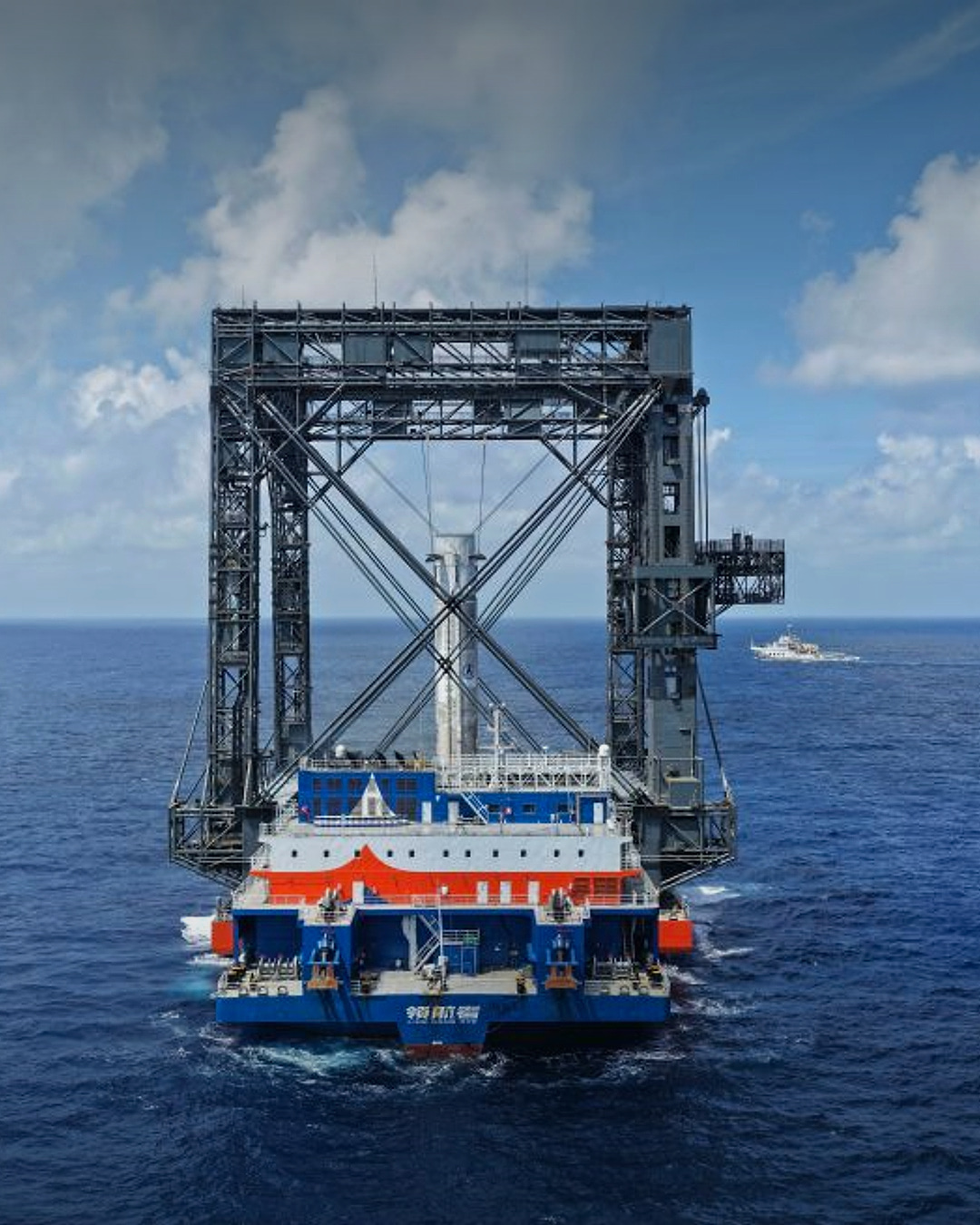
The Long March 10B net capture let a ship catch a returning rocket. On July 10, 2026, China’s Long March 10B lifted off from the Hainan commercial spacecraft launch site, sent a satellite into its planned orbit, and brought the first stage back to a seaborne recovery platform. The China National Space Administration says hooks on the stage engaged a high-strength arresting net arranged as a large grid.
That makes the event easier to understand than the phrase reusable launch vehicle. The upper part of the mission still had to continue toward orbit. The lower first stage had to separate, return under control, line up with a moving target at sea, and transfer its remaining motion into the capture system without falling into the water.
The successful recovery is an important engineering result, but it is not the end of the reuse story. A recovered booster still has to be inspected, repaired or refurbished as needed, cleared for another flight, and launched again. The public sources checked July 12, 2026 do not yet provide teardown findings, turnaround time, refurbishment cost, damage data, or a completed refight.
Long March 10B net capture quick answer
Long March 10B is a two-stage liquid-fueled commercial launch vehicle designed with a reusable first stage. CNSA lists the complete rocket at about 63 meters tall and 5 meters in diameter. CASC’s English release lists approximate liftoff mass of 760 tonnes, liftoff thrust of 890 tonnes, and reusable-mode capacity of about 16 tonnes to a 200-kilometer low Earth orbit.
On the maiden flight, the satellite and upper-stage mission continued toward orbit after stage separation. The first stage returned vertically to a recovery ship. Instead of touching down on landing legs, its onboard hooking mechanism engaged a high-strength # shaped net. The net and ship structure handled the final capture loads.
The useful beginner map is launch, separate, return, hook, inspect, refly. The first four steps happened in the reported mission. Inspection and any future refight are the evidence needed before calling this routine reuse.
Five reported facts, translated carefully
| Published fact | What it means | What not to assume |
|---|---|---|
| July 10, 2026 maiden flight | Long March 10B sent a satellite into its planned orbit and then recovered the first stage on the same mission. | The public sources do not identify the satellite or publish a detailed orbit in the release. |
| 63 m tall and 5 m wide | The complete two-stage launch vehicle was about as tall as a 20-story building before liftoff. | These are CNSA and CASC vehicle specifications, not BTI measurements. |
| 760-tonne liftoff mass | The rocket began the mission with a published mass of roughly 760 tonnes and about 890 tonnes of liftoff thrust. | Liftoff mass is not the mass that reached the recovery ship after propellant use and stage separation. |
| 16 tonnes to 200 km LEO in reusable mode | CNSA publishes an approximate payload capability for the reusable configuration to a low reference orbit. | That specification is not the disclosed payload mass of this mission or a guarantee for every orbit. |
| Sea-based # shaped arresting net | Hooks on the returning first stage engaged a high-strength net grid on the recovery vessel instead of landing on onboard legs. | One successful capture does not yet establish refurbishment time, refight reliability, cost, or routine operations. |
Step one: let the first stage do the hardest early push
A rocket carries several jobs in one tall stack. The first stage provides the large early push needed to accelerate the vehicle away from Earth while the vehicle is heaviest. It consumes much of its propellant, then separates so the upper stage does not have to carry the empty first-stage structure all the way through the rest of the mission.
That separation creates two paths. The upper stage and payload continue their orbital work. The first stage is now moving quickly away from the launch site and must manage its own return. Calling the whole rocket reusable hides this split. The July 10 recovery applies to the first stage, not to every piece of the mission returning together.
The public mission release says the satellite reached its preset orbit. It does not name the satellite or provide enough detail for BTI to independently reconstruct the mission profile. The safest conclusion is the one the sources support: the orbital delivery and first-stage capture were both reported successful.
Step two: guide a building-sized stage back toward a ship
Recovery starts long before the net. A returning stage must know its position, control its attitude, manage speed, and approach the recovery zone within the limits of its propulsion and control systems. The CNSA release describes the return as controlled and vertical, but it does not publish the full guidance sequence, engine restart timeline, weather limits, landing accuracy, or reserve margins.
The recovery target is also at sea. A vessel moves with waves, wind, and current. A successful capture therefore reflects the complete system: the stage, guidance, communications, propulsion, ship, net, deck equipment, and operating team. A dramatic final image can make the net look like the whole invention, but the net works only after the rest of the return has placed the stage inside a small enough capture envelope.
BTI is not filling the missing engineering sequence with animation or assumed Falcon 9 procedures. Long March 10B may share broad reusable-rocket problems with other vehicles, but the detailed control law, flight software, propellant margins, and final approach remain the developer’s evidence to publish.
Step three: put hooks into a high-strength grid
CNSA describes the recovery system as a world-first sea-based net capture for a launch vehicle. Its release says the first stage uses a hooking mechanism that works with a high-strength buffered arresting net arranged in a # shape. Photographs show the returned stage upright within the grid on the recovery ship.
The simple mental model is a catcher rather than a floor. A leg landing asks the vehicle to place feet onto a hard deck and support itself. A net capture asks hardware on the stage to engage a tensioned structure that can redirect and absorb the final motion. The load path, deck arrangement, vehicle hardware, and inspection points are different.
That does not prove the net is universally lighter, cheaper, safer, or better than landing legs. Public source material does not give a mass comparison, sea-state envelope, missed-capture behavior, replacement interval, deck-reset time, or lifecycle cost. The achievement is the demonstrated capture. Operational advantage remains a question for repeated flights and disclosed data.
Net capture, leg landing, and splashdown are not the same result
| Recovery path | Final contact | What it can demonstrate | What still needs proof |
|---|---|---|---|
| Long March 10B net capture | Stage hooks engage a high-strength grid on a sea platform. | Controlled vertical return and dry capture without onboard landing legs supporting the vehicle. | Damage, refurbishment, turnaround, refight, repeatability, weather limits, and cost. |
| Falcon 9 propulsive landing | The first stage descends onto landing legs at a drone ship or landing zone. | A different architecture for recovering and repeatedly flying orbital-class first stages. | Every individual stage and mission still requires inspection, acceptance, and mission-specific readiness. |
| Controlled splashdown and salvage | The stage enters the water and is retrieved afterward. | Return guidance, descent data, and recovery-team practice. | Whether wet hardware can be economically refurbished and flown again. |
The categories matter because the word recovered can cover very different hardware conditions. A stage photographed upright on a dry capture platform provides stronger evidence for intended reuse than debris retrieval, but the next-flight record is still the decisive proof.
Why recovery is not the same as reuse
Recovery answers one question: did the hardware come back in a controlled, retrievable condition? Reuse adds several more. Engineers must inspect structures, engines, tanks, valves, lines, avionics, thermal exposure, hooks, and any parts that carried the capture load. They must decide what can fly as-is, what needs servicing, and what must be replaced.
Then the organization must prove a repeatable process. Turnaround time matters. Labor and replacement parts matter. Launch-site and ship availability matter. A design can technically fly again yet fail to lower cost or increase cadence if every recovery requires long, expensive refurbishment.
The July 10 result should therefore be described neither as a mere stunt nor as a finished reusable-rocket system. It is a successful first controlled capture on an orbital mission and a strong piece of evidence for the architecture. The refight and operating record will show how much of the promised reuse system exists beyond the first landing.
How BTI evaluated the Long March 10B story
BTI checked the July 10 CNSA mission release, the official CASC English report, the Xinhua source gallery, and SpaceX’s Falcon 9 vehicle page on July 12, 2026. The analysis keeps the orbital-delivery result, first-stage recovery, vehicle specifications, and net design attributed to those sources.
A fresh authenticated Instagram Business Discovery capture informed packaging only. Interesting Engineering’s July 11 Reel about the exact recovery showed 9,988 likes and 203 comments at capture time, or 10,191 visible interactions. That is not reach, plays, saves, shares, follows, watch time, causation, or proof of virality. BTI borrows only the concrete event-first mechanic and uses original wording, source links, credited editorial imagery, larger integrated text, and its own audio.
BTI did not witness the mission, inspect the booster, validate the payload, audit telemetry, model the net loads, verify the developer’s cost claims, or test refurbishment. No affiliate link appears because this is launch infrastructure rather than a checked retail offer. No Product or Review schema is used.
What remains unknown
- The satellite identity, disclosed payload mass, and detailed mission orbit.
- The complete return trajectory, engine sequence, guidance accuracy, and propellant margins.
- Booster condition after capture and any damage at the hook, structure, engines, or tanks.
- Inspection scope, refurbishment work, replacement parts, labor, and turnaround time.
- The net system’s sea-state, wind, weather, miss, abort, reset, and lifecycle limits.
- Whether this same first stage will refly successfully and how often the architecture can repeat.
- Verified launch-cost change, cadence benefit, customer pricing, or commercial availability.
What to remember
The Long March 10B image is memorable because the recovery method is visible: a 63-meter rocket went up, its first stage came back, and a ship caught that stage in a net. The six-part map is launch, separate, return, hook, inspect, refly.
The first four steps are supported by the July 10 mission report. Inspection and refight remain the next evidence. That boundary lets readers appreciate a real engineering breakthrough without turning one successful catch into a routine, low-cost reuse record that has not yet been demonstrated publicly.
Follow @besttechinsight for the engineering behind the clip in plain English. Related BTI explainers cover what Falcon 9 reuse actually reuses, the cargo ship carrying a 150-foot rigid wing, and NASA’s eight-rotor Dragonfly spacecraft.
Long March 10B net-capture FAQ
Did the whole Long March 10B rocket come back?
No. The reported recovery covered the first stage. The upper-stage and satellite mission continued toward orbit after stage separation.
Did the booster land on legs?
No. CNSA says hooks on the returning stage engaged a high-strength # shaped arresting net on a seaborne recovery platform.
Was this Long March 10B’s first flight?
Yes. The official sources describe July 10, 2026 as the vehicle’s maiden flight and report both payload delivery to the planned orbit and first-stage recovery as successful.
How large is Long March 10B?
CNSA and CASC list the two-stage rocket at approximately 63 meters tall and 5 meters in diameter, with roughly 760 tonnes of liftoff mass.
Does one successful capture prove the rocket is reusable?
It proves a controlled recovery milestone. Routine reuse still needs inspection, refurbishment, turnaround, and successful refight evidence.
Is the net system better than Falcon 9 landing legs?
The public evidence does not establish a universal winner. The systems use different vehicle hardware and load paths. Repeated flights, reliability, turnaround, and cost data are needed for a meaningful comparison.
Sources
- China National Space Administration mission release: Primary source for the July 10 mission result, first-stage controlled recovery, sea-based net system, vehicle dimensions, reusable payload specification, and # shaped arresting-grid description.
- China Aerospace Science and Technology Corporation English release: Official English source for the maiden flight, payload-to-orbit statement, net capture, approximate liftoff mass, thrust, dimensions, and reusable-mode capacity.
- Xinhua Long March 10B mission gallery: Source report and credited photographs of the launch and the returned first stage on the seaborne net-capture platform.
- SpaceX Falcon 9 vehicle page: Official context for a different first-stage recovery architecture. It is used only to explain why recovery method and repeat reuse are separate questions.
Follow BTI for the next plain-English tech breakdown
BTI turns current tech stories into simple buyer and science explainers without claiming hands-on testing, prices, ratings, or availability.